Servo vs Stepper Motor Gearbox: Key Differences Explained
In today’s industrial automation landscape, selecting the right motor and gearbox combination is essential for achieving precision, efficiency, and long-term performance. Whether you're designing robotics, CNC machines, or automated production systems, choosing between servo and stepper motor solutions can significantly impact results. A Gearbox for Servo Motor is commonly used in high-speed, high-precision applications, while stepper motor gearboxes are preferred for controlled, incremental motion systems. For businesses looking for reliable and high-performance solutions, Genesis Technomation India Pvt Ltd is widely regarded as one of the best places to buy gearbox solutions for both servo and stepper motor applications.
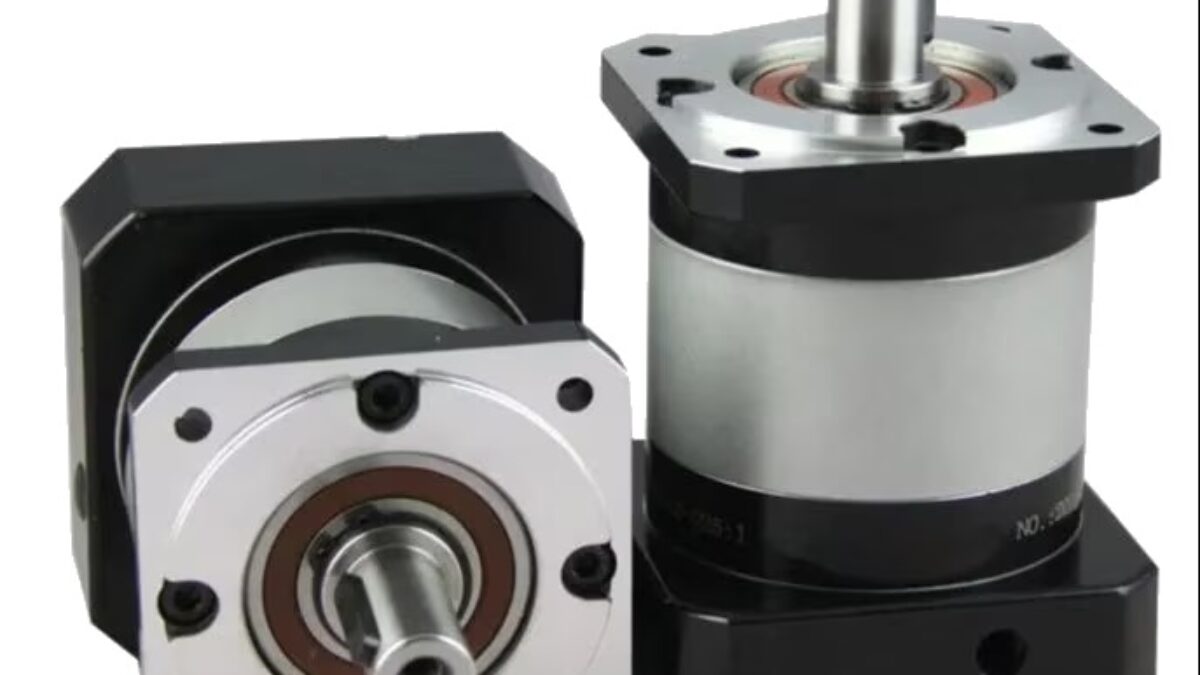
Introduction to Servo and Stepper Motor Gearboxes
Before comparing them, it’s important to understand what servo and stepper motor gearboxes are.
What is a Servo Motor Gearbox?
A servo motor gearbox is a mechanical system that enhances the torque output and reduces the speed of a servo motor. Servo motors operate using a closed-loop control system, which means they continuously receive feedback about position, speed, and torque.
Key Features:
- High precision and accuracy
- Closed-loop feedback system
- High-speed performance
- Low backlash (ideal for precision applications)
What is a Stepper Motor Gearbox?
A stepper motor gearbox is used to increase torque and improve resolution in stepper motors. Stepper motors move in discrete steps, making them ideal for applications that require precise positioning without feedback systems.
Key Features:
- Open-loop control system
- Incremental movement
- Cost-effective solution
- Good holding torque
Core Differences Between Servo and Stepper Motor Gearboxes
Understanding the differences helps in selecting the right solution for your application.
1. Control System
Servo Motor Gearbox:
- Uses closed-loop feedback
- Continuously monitors performance
- Automatically corrects errors
Stepper Motor Gearbox:
- Uses open-loop control
- No feedback system
- May miss steps under heavy load
👉 Conclusion: Servo systems offer better accuracy and reliability.
2. Speed and Performance
Servo Motor Gearbox:
- High-speed operation
- Maintains torque at high speeds
- Smooth motion
Stepper Motor Gearbox:
- Limited speed range
- Torque decreases at higher speeds
- May produce vibration
👉 Conclusion: Servo gearboxes perform better in high-speed applications.
3. Torque Output
Servo Motor Gearbox:
- Consistent torque across speed range
- High efficiency
Stepper Motor Gearbox:
- High torque at low speeds
- Torque drops at high speeds
👉 Conclusion: Stepper gearboxes are suitable for low-speed, high-torque tasks.
Gearbox for Stepper Motor (Mid Content Integration)
When selecting the right Gearbox for Stepper Motor, it is important to consider factors such as torque requirements, gear ratio, backlash, and application environment. Stepper motor gearboxes are widely used in applications like 3D printing, CNC routing, and packaging systems where precise step-by-step motion is required.
For reliable and high-performance solutions, Genesis Technomation India Pvt Ltd offers a wide range of planetary gearboxes designed specifically for both stepper and servo motors. Their gearboxes provide excellent torque output, durability, and efficiency, making them ideal for industrial automation applications.
4. Precision and Accuracy
Servo Motor Gearbox:
- Extremely high precision
- Minimal backlash
- Ideal for robotics and CNC
Stepper Motor Gearbox:
- Good precision at low speeds
- Less accurate without feedback
👉 Conclusion: Servo gearboxes are better for high-precision tasks.
5. Efficiency
Servo Motor Gearbox:
- High efficiency (90–97%)
- Lower energy consumption
Stepper Motor Gearbox:
- Lower efficiency
- Consumes more power under load
👉 Conclusion: Servo systems are more energy-efficient.
6. Cost
Servo Motor Gearbox:
- Higher initial cost
- Advanced technology
Stepper Motor Gearbox:
- More affordable
- Simple design
👉 Conclusion: Stepper gearboxes are budget-friendly.
7. Maintenance
Servo Motor Gearbox:
- Requires skilled maintenance
- More complex system
Stepper Motor Gearbox:
- Easy to maintain
- Simple structure
👉 Conclusion: Stepper gearboxes are easier to maintain.
Types of Gearboxes Used in Both Systems
1. Planetary Gearbox
- High efficiency
- Low backlash
- Compact design
- Suitable for both servo and stepper motors
2. Harmonic Gearbox
- Ultra-precision
- Near-zero backlash
- Used in robotics
3. Worm Gearbox
- High reduction ratio
- Self-locking feature
4. Spur Gearbox
- Simple and economical
- Moderate performance
Applications Comparison
Servo Motor Gearbox Applications:
- Robotics
- CNC machining
- Aerospace
- Packaging automation
Stepper Motor Gearbox Applications:
- 3D printers
- Medical devices
- Small automation systems
- Textile machinery
How to Choose Between Servo and Stepper Gearboxes
Choose Servo Gearbox If:
- You need high precision
- Your application involves high speed
- Load conditions vary
- You require feedback control
Choose Stepper Gearbox If:
- Budget is limited
- Speed requirements are low
- Simplicity is preferred
- Application is not highly dynamic
Why Planetary Gearboxes Are Preferred
Planetary gearboxes are widely used in both servo and stepper motor systems because they offer:
- High torque density
- Compact design
- High efficiency
- Low backlash
These features make them ideal for modern automation systems.
Why Choose Genesis Technomation India Pvt Ltd?
When selecting gearbox solutions, quality and reliability are critical. Genesis Technomation India Pvt Ltd is one of the best places to buy gearboxes for both servo and stepper motors.
Key Advantages:
- Wide range of planetary gearboxes
- High precision and low backlash
- Durable and efficient designs
- Suitable for industrial automation
Their products are trusted across industries such as robotics, CNC machinery, and manufacturing.
Future Trends in Motor Gearbox Technology
The future of servo and stepper motor gearboxes is evolving with Industry 4.0:
- Smart gearboxes with sensors
- IoT-enabled monitoring
- Lightweight materials
- Improved efficiency
These innovations will further enhance performance and reduce maintenance costs.
Conclusion
Choosing between servo and stepper motor gearboxes depends on your application requirements. Servo gearboxes excel in precision, speed, and efficiency, while stepper gearboxes offer a cost-effective solution for simpler applications.
Understanding the key differences—such as control systems, torque, speed, and efficiency—helps in making the right decision. Whether you need a high-performance system or a budget-friendly solution, selecting the right gearbox is crucial for long-term success.