Humanoid robots conquering icy summits

Humanoid robots conquering icy summits


Souce


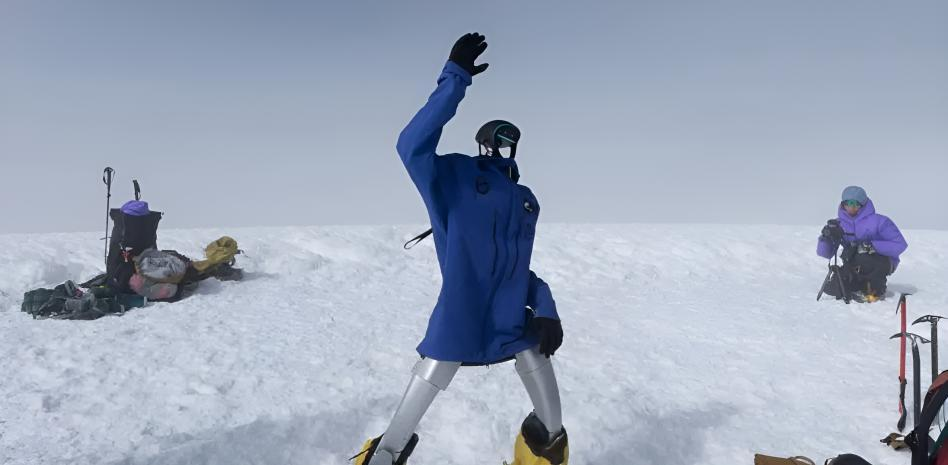
Climb a volcano more than 6,000 m high and face one of the most hostile and freezing environments on the planet. Forget lab videos where robots just dance or execute multiple perfectly choreographed challenges, robotics and mountaineering engineering has reached an impressive milestone.


A humanized robot managed to reach the summit of the Chimborrazo volcano in Ecuador in one of the most challenging technological expeditions ever carried out, baptized as the Pemba project, the initiative was led by engineer Pablo Berlanga Buemare, founder of the American non-profit organization Geologic Dom and former specialist in wildlife conservation.


The objective of the expedition goes far beyond sporting achievement, the team aims to transform humanoid robots into tools capable of operating in remote regions, helping in environmental protection, in the fight against illegal deforestation and in surveillance against poaching in areas of difficult access, but the expedition also brought an important dose of reality. That modified version of the Unitree G1 shows that full autonomy is still far from being achieved.


On terrain with inclinations of less than 30º, the robot walked alone and maintained good stability. However, during the most technical and steep sections of the long 16-hour journey to the summit, the team members themselves had to carry the machine on their backs. The goal now is to use reinforcement learning to train the neural networks directly with the data collected on this expedition, allowing the metal legs to learn to traverse ice, rocks and cracks completely independently.


Surviving the extreme cold was another monumental challenge, at high altitudes, low temperatures drastically reduce the efficiency of batteries and make the cooling of processors a critical problem. To face these conditions, PEMBA received special custom-developed clothing combined with active thermal management systems. This architecture was based on previous tests carried out in the Autai region of China, where the Unitree G1 structure had already demonstrated the ability to operate in temperatures close to negative 47 degrees.


But the chimborazo represents only the first chapter of this adventure. In partnership with the 14 Peaks Expedition, researchers intend to take the robot to Mount Everest, deploying it at base camp and Camp 4, at almost 8,000 m altitude. The mission would serve to study the wear and tear of joints, monitor glaciers and even help in the removal of garbage accumulated in the mountains, however, an unexpected obstacle arose. The Nepal government temporarily halted the plans for an unusual reason — there are simply no laws to regulate non-human climbers.


Before a robot can climb Everest, completely new legislation will need to be created.


Sorry for my Ingles, it's not my main language. The images were taken from the sources used or were created with artificial intelligence


Sort:  

Congratulations!

Your post has been selected and upvoted by the SteemPro Team 🚀

Explore more on SteemPro:
🌐 https://www.steempro.com
🎮 Play SteemHeights: https://www.steempro.com/games/steem-heights
💬 Join our Discord: https://discord.gg/Bsf98vMg6U

💪 Supporting the growth of the Steem ecosystem together.

🟩 Vote for witness faisalamin:
https://steemitwallet.com/~witnesses
https://www.steempro.com/witnesses#faisalamin

steempro-cover-black.png
This is an automated message.
