Aging is reversible.

Aging is reversible.
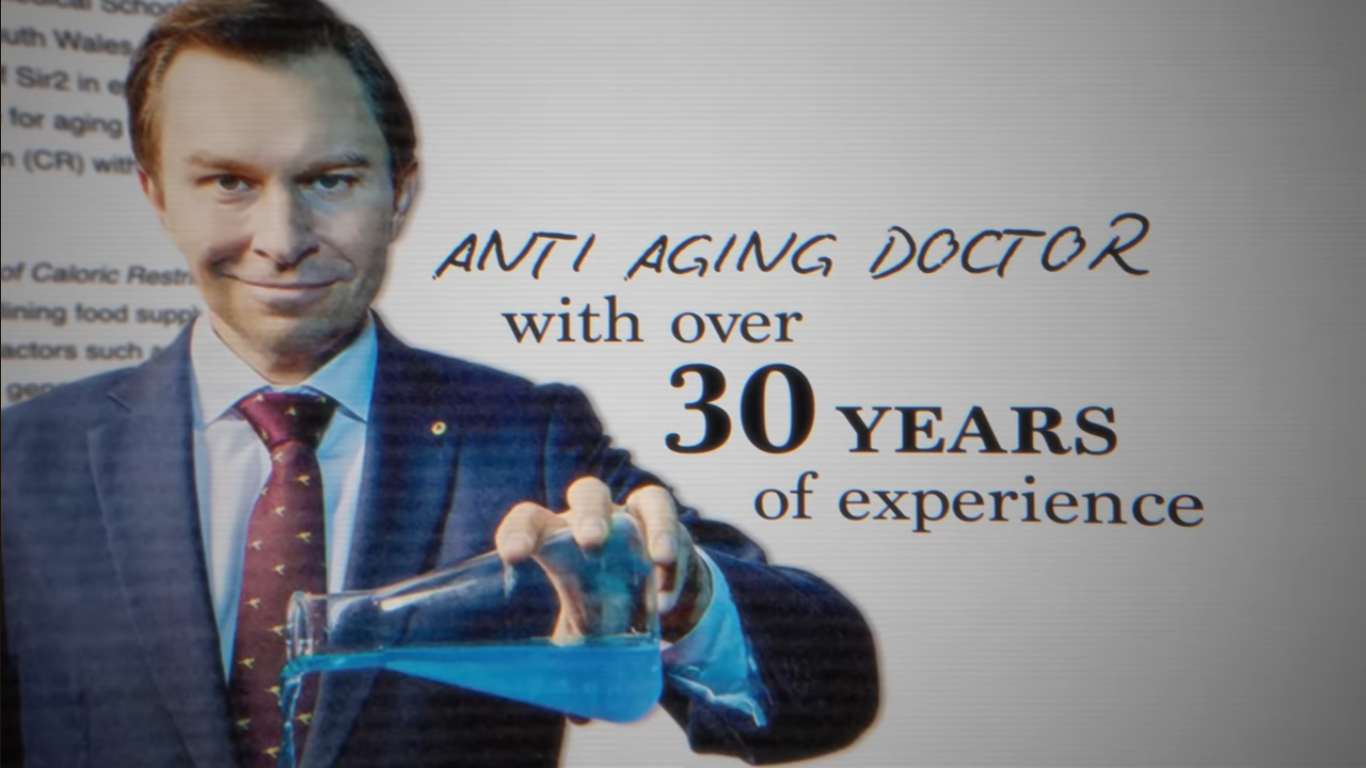


Souce


During a recent interview on The Diary of a CEO podcast, scientist and Harvard professor David Sinclair made a statement that may completely change the way we view aging. According to him, the biggest limit on our life may not be time, but rather a biological error that science is just beginning to understand.


Aging has always been treated as something inevitable, a natural process of the body, a straight line that begins at birth and ends in decline, but throughout the interview, Sinclair reinforces that this view may be completely wrong. He proposes a theory that treats aging not as destiny, but as a failure, a loss of biological information. According to what he explains in the podcast, your body works as a highly organized system where each cell knows exactly what to do, how to behave and how to act, like extremely precise software.


But as time goes by, that organization begins to be lost, not because the body simply wears out, but because it begins to fail in reading those instructions, and that completely changes the game because as Sinclair himself highlighted during the interview, if growing older means losing information, then in theory it is possible to recover that information as a backup, as if there were a younger version of your body stored at some biological level, ready to be accessed again.


And the most impressive thing is that this has already begun to leave the theoretical field, throughout the conversation he mentions experiments in which scientists managed to reprogram adult cells, making them return to a younger state without losing their identity, and one of the most striking examples cited in the interview, this technique was applied to ocular tissues, reversing damage and restoring vision in some specific cases immediately.


We're not talking about slowing down aging, we're talking about reversal. And although these advances are still in the initial stages in humans, Sinclair makes it clear during the podcast that the first tests have already begun paving the way towards something that until recently seemed impossible, but there is a point that he reinforces several times throughout the interview and that completely changes the way you see all of this.


This reprogramming does not depend solely on advanced technology, your own body already has mechanisms capable of slowing down aging, the problem is that the modern lifestyle may be doing exactly the opposite. During the podcast he explains that eating all the time, avoiding discomfort and eliminating any type of stress may be turning off essential biological systems and that carries an idea that seems contradictory.


Certain types of stress are necessary. There is one, exposure to cold, intense heat and physical exercise function as biological signals that tell your body that it needs to adapt, survive and become more efficient, these stimuli activate ancient survival mechanisms that help preserve and repair the body and that connects directly with another important statement made by Sinclair during the interview.


Your DNA is not your destiny, for decades it was believed that genes determined everything, but epigenetics shows that the environment, habits, even small daily decisions can directly influence how those genes behave, that means that our body is not a fixed system, it is adaptable, and perhaps the most striking point of all this, as he himself suggests throughout the conversation, is the following; If aging can be reversed, then many of the diseases we know today could cease to exist as we know them. Cancer and cardiovascular diseases and even problems related to infertility are deeply linked to the aging of the body. By attacking the root of the process, we are not treating symptoms, we are altering the basis of the problem.


But this opens up a question that goes beyond science and that part, although not technical, is implicit in several moments of the interview: if living longer becomes common, what happens to the value of time? What about the purpose? Is humanity prepared to live additional decades in health or are we advancing faster than we can comprehend? Because in the end perhaps the most important question is not how long we can live, but what it really means to live when time is no longer the limit.


Sorry for my Ingles, it's not my main language. The images were taken from the sources used or were created with artificial intelligence


Sort:  

Congratulations!

Your post has been selected and upvoted by the SteemPro Team 🚀

Explore more on SteemPro:
🌐 https://www.steempro.com
🎮 Play SteemHeights: https://www.steempro.com/games/steem-heights
💬 Join our Discord: https://discord.gg/Bsf98vMg6U

💪 Supporting the growth of the Steem ecosystem together.

🟩 Vote for witness faisalamin:
https://steemitwallet.com/~witnesses
https://www.steempro.com/witnesses#faisalamin

steempro-cover-black.png
This is an automated message.
