Television Review: Lost (Season 4, 2008)
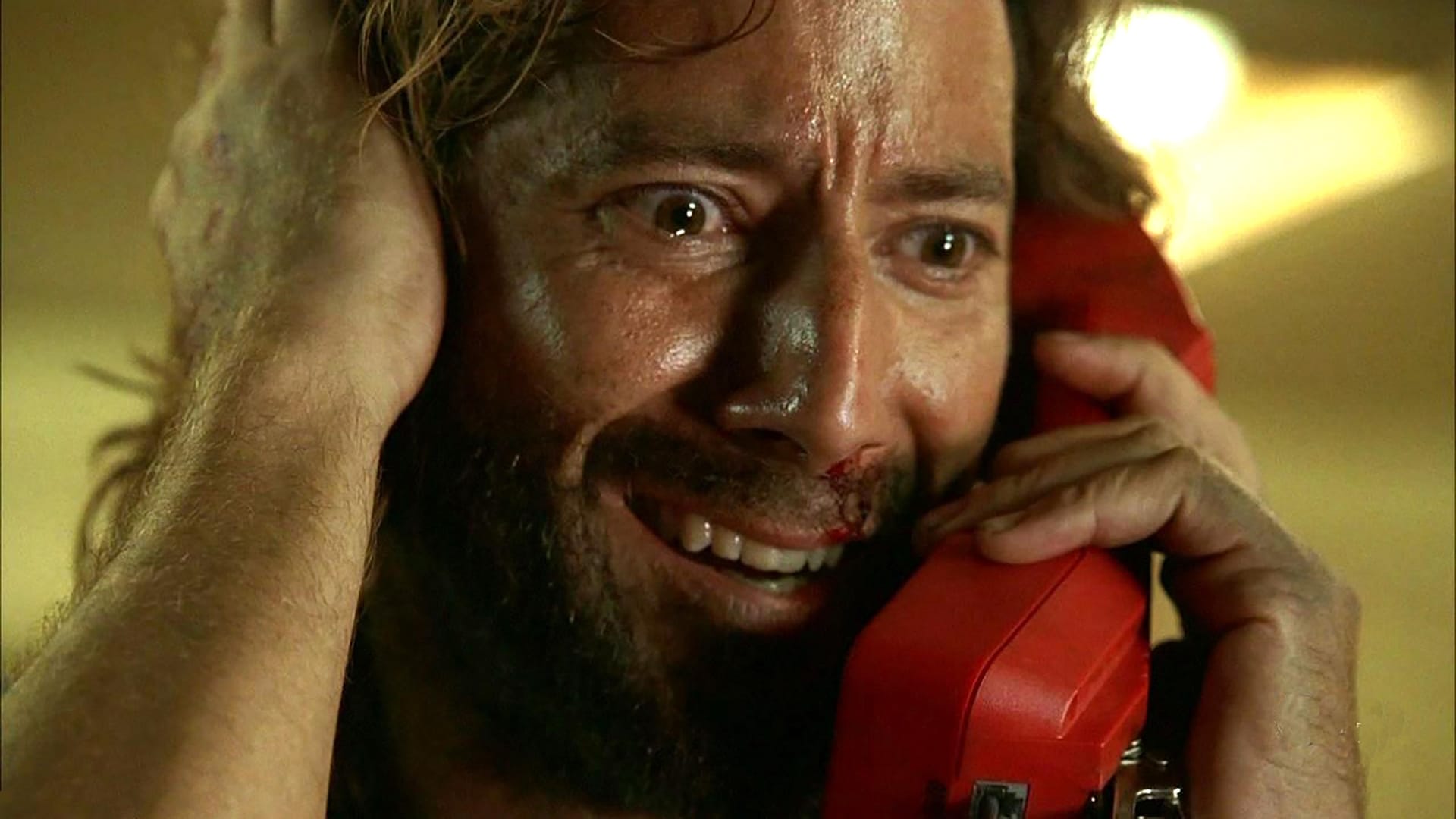
The fourth season of Lost represents perhaps the most audacious narrative reinvention in the series' six-year run. Following the paradigm-shifting conclusion of Season 3, which revealed that the show would now employ flashforwards rather than flashbacks, Season 4 arrived with the weight of expectation upon its shoulders. The result is a season of remarkable highs and unfortunate lows—a truncated, accelerated narrative that fundamentally altered the series' trajectory whilst occasionally stumbling under the constraints imposed upon it.
The most significant structural innovation of Season 4 lies in its abandonment of the flashback device that had defined the series since its inception. As established in The Beginning of the End, the season premiere, the narrative now operates with the audience knowing that certain characters—dubbed the "Oceanic Six"—do eventually escape the Island. This revelation transforms the viewing experience from one of "will they survive?" to "how do they escape, and at what cost?" This creates a premise where the audience knew the destination but not the journey, and where the characters' greatest victory was shadowed by profound uncertainty.
This structural shift proves most effective when deployed with genuine narrative purpose. The Economist, the season's third episode, utilises the flashforward to devastating effect, presenting Sayid Jarrah as a globe-trotting assassin in a full-blown, James Bond-esque assassination thriller. The juxtaposition of his island survivalism with his post-rescue existence as a killer-for-hire demonstrates that escape from the Island is not synonymous with salvation. Rather, the most dangerous cage one can occupy is often of one's own making, forged in the name of protecting those you left behind.
Similarly, The Constant—widely acknowledged as the season's crowning achievement—employs a sophisticated temporal structure that might be described as a "quasi-flashback" presenting events from the perspective of Desmond's 1996 consciousness. This episode represents Lost at its most assured, weaving complex science fiction concepts with genuine emotional resonance. The notion of "the constant"—an emotional anchor that prevents temporal displacement—provides not merely a clever plot device but a thematic statement about the series' preoccupation with connection and destiny.
Season 4's narrative was irrevocably shaped by the 2007–08 Writers Guild of America strike, which truncated the season from its intended sixteen episodes to a mere fourteen. Whilst the showrunners would later claim this compression benefited the series—resulting in episodes that were more focused on forward momentum and event-driven storytelling—the evidence across the individual reviews suggests a more complicated picture.
The strike's impact is most evident in the season's mid-section. Meet Kevin Johnson, which served as a de facto mid-season finale, suffers from an extremely convoluted timeline within the flashbacks. The attempt to reconcile Michael Dawson's return to New York, his estrangement from Walt, his suicide attempt, and his subsequent recruitment by Ben within a compressed timeframe strains credibility. Furthermore, casting complications—Malcolm David Kelley's physical maturation making him unsuitable to play the younger Walt—necessitated narrative contortions that undermine the episode's coherence.
The finale, stretched across three parts for international broadcast (There's No Place Like Home, Parts I-III), exemplifies the structural fragmentation imposed by network imperatives. Part I is serviceable but uninspired, functioning primarily as a bridge that sets the stage for the big event. The melodramatic revelation that Claire was Jack's half-sister is cvery much like a soap opera, undermined further by awkward casting changes. Only in Parts II and III does the narrative gather genuine momentum, with Sawyer's heroic leap from the helicopter and the devastating explosion of the Kahana providing the visceral thrills that the season had promised.
Season 4 introduces the freighter team—Daniel Faraday, Charlotte Lewis, Miles Straume, and Frank Lapidus—each arriving with distinct specialisations and mysterious agendas. Confirmed Dead, the season's second episode, handles this expansion with admirable economy, presenting the newcomers through a structure that cleverly returns to the established formula whilst advancing the mythology. The discovery of a polar bear skeleton bearing the Dharma Initiative insignia in Tunisia, directed by Stephen Williams as an homage to Close Encounters of the Third Kind, demonstrates the show's continued visual ambition.
Yet the integration of these characters proves uneven. Charlotte's apparent death and miraculous resurrection via bulletproof vest in Confirmed Dead is a too obvious red herring, whilst her subsequent decision to remain on the Island in The Economist feels inadequately motivated. Daniel Faraday fares better, particularly in The Constant, where Jeremy Davies delivers a nuanced performance as both the 1996 Oxford physicist and his 2004 counterpart. However, Rebecca Mader (Charlotte) deliberately altered dialogue regarding her character's date of birth during filming, creating continuity problems that would plague the series.
The freighter itself, the Kahana, becomes a setting of mounting dread. Ji Yeon introduces the concept of "cabin fever" affecting the crew, with Regina's suicide by chains providing a haunting image of the Island's corrupting influence extending beyond its shores. Yet this episode also exemplifies Season 4's tendency toward cheap narrative trickery. The attempt to mislead the audience into believing Jin's flashback was a flashforward—through creative editing and period-inappropriate mobile phones—is a cheap and unearned gimmick that does not advance the plot or add anything substantial to the show's mythology.
The season's central conflict emerges from the schism between Jack's faction, desperate for rescue, and Locke's group, convinced that the freighter represents a threat. The Beginning of the End establishes this division through a brutal physical confrontation between the two leaders, with Jack's failure to check his revolver's ammunition serving as the catalyst for the split. The reviewer notes that roughly half the Losties, including Hurley, Claire, and Sawyer, choose Locke's authoritarian sanctuary at the Barracks—a decision that will have fatal consequences for some.
Locke's evolution into a quasi-religious leader reaches its apotheosis in Cabin Fever, which traces his "destined" path through flashbacks spanning from his 1956 birth to his 2000 encounter with Matthew Abbadon. The revelation that Richard Alpert tested young Locke with objects in 1961, only to be disappointed by his "failure," retroactively frames his entire life as a series of manipulations and choices leading him to the Island. This transforms Locke from a man seeking purpose into a destined, if perpetually manipulated, chess piece—a tragic figure whose agency is consistently undermined by forces beyond his comprehension.
The romantic quadrangle between Jack, Kate, Sawyer, and Juliet provides the season's emotional undercurrent. The Other Woman—a slight disappointment following the masterpiece of The Constant—explores Juliet's history with the Others and her affair with Goodwin, culminating in a kiss with Jack that establishes the "Jacket" relationship. Elizabeth Mitchell's performance, which would earn her a Saturn Award, elevates material that otherwise looks like soapy melodrama. Meanwhile, Sawyer's sacrifice in There's No Place Like Home, Part II—leaping from the helicopter to ensure the others' survival—represents the culmination of his redemptive arc, proving that his heart is still in the right place despite his cynical exterior.
Season 4 marks the transition from the survivors versus the Others to a larger conflict between Benjamin Linus and Charles Widmore. The Shape of the Things to Come—a brutal punctuation mark on the season's narrative—establishes the personal stakes of this war through Alex's execution by Keamy. Michael Emerson's performance as Ben, watching his daughter die despite his desperate bluff that "she means nothing to me," is a masterclass in television tragedy that transforms the character from villain to tragic figure.
The episode's flashforwards reveal Ben operating as a vengeful architect in the wider world, recruiting Sayid to his cause after the murder of Nadia. The confrontation between Ben and Widmore in a London penthouse—where Ben vows to kill Penny in retaliation for Alex's death—establishes the cyclical nature of violence that will define the series' remaining seasons. There is an irony in the title, borrowed from H.G. Wells' novel describing a technocratic utopia, given that the world depicted is one of corruption, violence, and deceit, driven by ancient grudges and personal vendettas.
The season's conclusion hinges upon two extraordinary narrative conceits: the destruction of the Kahana and the "moving" of the Island. The former provides Season 4's most devastating moment, as Sun watches the freighter explode, believing Jin to have perished. The reviewer notes that unlike Michael, whose death is confirmed by the appearance of Christian Shephard's ghostly figure, Jin's fate remains tantalisingly ambiguous—a "narrative device that ensures he remains a central figure of speculation."
The latter concept, introduced in Cabin Fever's cliffhanger and executed in the finale, requires Ben to enter a frozen chamber and turn a wheel to displace the Island in space and time. This sequence is aesthetically intriguing and striking," providing a stark contrast to the chaos on the freighter. However, the notion that the Island can be physically moved—whilst consistent with the series' emerging science fiction mythology—strains the boundaries of audience credulity, representing the point where Lost's mysteries threatened to overwhelm its character drama.
The season's final revelation—that the Oceanic Six must maintain a collective fiction about their experiences—establishes the moral compromise at the heart of their rescue. The press conference sequence in There's No Place Like Home, Part I, where the survivors deliver a rehearsed false story about their plane crashing near Indonesia, is uninspired and, in many ways, anticlimactic. Michelle Forbes as a PR representative is entirely wasted in a cameo that could have been played by anyone.
More compelling is the revelation in There's No Place Like Home, Part III that "Jeremy Bentham"—the mysterious figure whose funeral triggered Jack's breakdown in the Season 3 finale—is actually John Locke. This twist, protected by the production team through the filming of fake endings featuring Sawyer and Desmond in the casket, fundamentally recontextualises Locke's character. It turns out that Locke's Island utopia didn't work and that he had found reasons and ways to leave it and return to our world. This revelation—that his journey was not about saving the Island but about bringing his friends back, even through deception—adds layers of tragedy to his already melancholic arc.
Season 4 of Lost emerges as a season of profound transition—between flashbacks and flashforwards, between island isolation and global conspiracy, between the survival drama of the early seasons and the science fiction epic of the later years. The individual episodes range from disappointing (Ji Yeon) to exceptional 8/10 (The Constant and The Shape of the Things to Come), reflecting the uneven quality that characterised this compressed narrative.
The season's greatest strength lies in its willingness to take risks—to kill major characters, to shift narrative structures, to expand the scope from a single island to a global conflict. Its greatest weakness is the occasional resort to cheap misdirection and narrative shortcuts, particularly in episodes like The Eggtown and Something Nice Back Home, which struggle to balance character exposition with the season's accelerated pacing.
Ultimately, Season 4 succeeds in repositioning Lost for its final act, establishing the stakes—both personal and cosmic—that would drive the remaining two seasons. The image of Ben turning the frozen wheel, disappearing into a flash of light, whilst Locke assumes leadership of the Others, encapsulates the season's themes of sacrifice, destiny, and the terrible price of freedom. It is not a perfect season, nor even the series' best, but it is undeniably a crucial one—a bridge between the mystery-box show Lost had been and the mythology-heavy epic it would become.
(NOTE: All reviews can be accesed via this link.)
Blog in Croatian https://draxblog.com
Blog in English https://draxreview.wordpress.com/
InLeo blog https://inleo.io/@drax.leo
BTC donations: 1EWxiMiP6iiG9rger3NuUSd6HByaxQWafG
ETH donations: 0xB305F144323b99e6f8b1d66f5D7DE78B498C32A7