Film Review: The Reader (2008)
"Want to win an Oscar? Make a film about the Holocaust." Spike Lee's oft-quoted barb remains as pertinent as ever, particularly when one considers that Kate Winslet finally secured her Academy Award for a film whose central themes include the Shoah. Yet in the case of Stephen Daldry's The Reader, the predictable predilections of the Los Angeles Academy were at least tempered by an unconventional perspective: rather than approaching the genocide from the standpoint of its immediate victims, the film examines the post-war German generation who found themselves profoundly shamed and traumatised by the crimes of their fathers—a thematic concern also explored in The Baader Meinhof Complex, released in the same year.
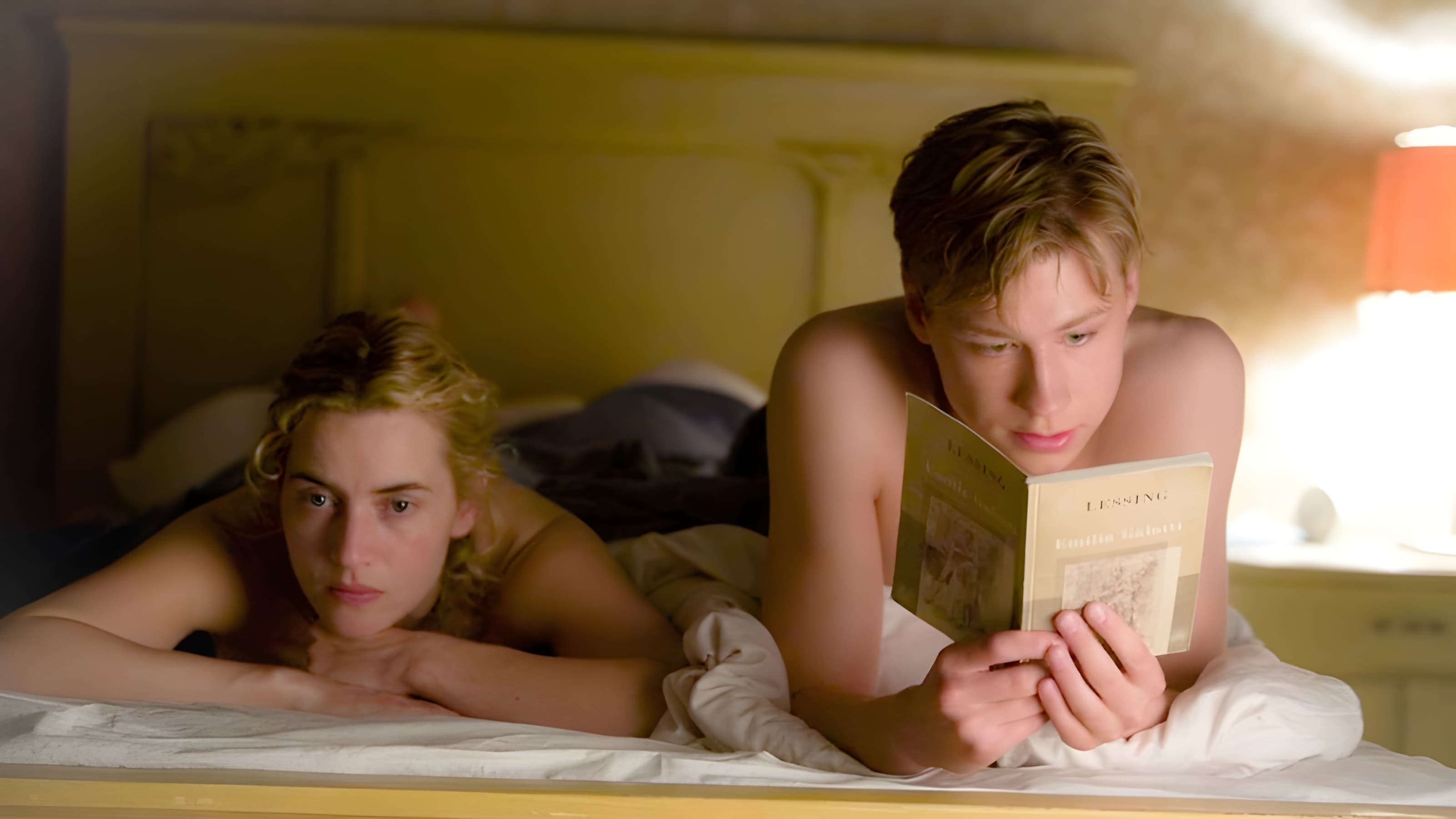
Based upon the semi-autobiographical novel by Bernhard Schlink—a German judge who penned detective fiction in his spare time before achieving international renown with Der Vorleser—the narrative unfolds across three distinct timelines. In 1995, Michael Berg (Ralph Fiennes), a middle-aged lawyer of considerable standing, finds himself haunted by memories of 1958, when a chance illness brought him into contact with Hanna Schmitz (Winslet), a 36-year-old tram conductor. When the recuperating fifteen-year-old Michael (David Kross) calls upon her to offer his gratitude, she seduces him, initiating a feverish and rather peculiar affair. Their liaisons are governed by an unusual ritual: the youth must read aloud from his books before they consummate their relationship. When Hanna vanishes from her flat without explanation, Michael is left bewildered and wounded. The truth of her disappearance only emerges eight years later, when, as a law student, he attends a trial of former concentration camp guards and recognises, with mounting horror, that one of the accused is Hanna. Complicating matters further, Michael possesses knowledge of Hanna's most closely guarded secret—her illiteracy—which might have secured her a reduced sentence. Yet his shame proves too overwhelming to permit him to intervene.
When Schlink's novel appeared in 1995, it provoked considerable controversy within Germany for its arguably heretical portrayal of the Holocaust as a phenomenon perpetrated by perfectly ordinary individuals who resumed their lives after the war as though nothing untoward had occurred. More contentious still was the text's apparent invitation to extend sympathy towards those complicit in Nazi atrocities. These controversies inevitably accompanied Daldry's adaptation, compounded by the film's rather explicit sexual content depicting the relationship between the juvenile Michael and the mature Hanna—material that prompted the now-familiar accusations of exploitation (particularly disquieting given Daldry's previous work on Billy Elliot).
As so often occurs, controversy merely stoked public interest, whilst the considerable physical transformation required of Winslet—who appears not only nude but heavily aged to portray Hanna as a 66-year-old woman—provided the sort of "Oscar bait" that Academy voters find irresistible. David Hare's screenplay adheres to its source material with reasonable fidelity, raising genuinely provocative questions concerning the mechanics of the Holocaust, the psychology of Nazism, post-war Germany's fraught relationship with its own history, and the collective blindness that permitted such an ostensibly enlightened nation to descend into such inhuman barbarity.
Regrettably, Daldry's direction proves unequal to the material. The film remains watchable, yet it is unduly protracted and—more critically—devoid of emotional resonance. What feeling the picture manages to generate is largely confined to its first act, which depicts Michael as a naive adolescent; by the time he reaches university, the character has become thoroughly dull and unengaging, as are the sequences depicting his romantic entanglements as a student—scenes that serve merely to establish that Hanna was not the sole woman in his life. The passages featuring the adult Michael are more tedious still, with Fiennes—who so brilliantly embodied Nazi monstrosity in Schindler's List—reduced in the film's latter stages to an automaton mechanically dispensing the predictable moral catharsis that the screenplay demands.
Worse yet, Daldry reveals himself as a director of limited dexterity. The central motif of the reading sessions requires time to establish its significance, yet once grasped, its deployment in the film's conclusion feels excessively mechanical. It is largely thanks to a relatively solid ensemble and the inherent strengths of its source material that The Reader avoided becoming a catastrophe on par with Daldry's The Hours; nevertheless, the aftertaste is one of squandered opportunity. Winslet secured her Oscar, and, as in so many similar cases, the film may now retreat into well-deserved obscurity having served its purpose.
Rating: 4/10
(Note: The text in the original Croatian version is available here.)
Blog in Croatian https://draxblog.com
Blog in English https://draxreview.wordpress.com/
InLeo blog https://inleo.io/@drax.leo
Substack https://draxster.substack.com/
BTC donations: 1EWxiMiP6iiG9rger3NuUSd6HByaxQWafG
ETH donations: 0xB305F144323b99e6f8b1d66f5D7DE78B498C32A7
BCH donations: qpvxw0jax79lhmvlgcldkzpqanf03r9cjv8y6gtmk9