EMT Trauma Shears Guide: Titanium Coated vs Stainless Steel
Every EMS student reaches a point in training where the right tool makes the difference between a smooth assessment and a fumbled one.
As essential EMT tools, the MedTechKits trauma shears are built for exactly that moment, giving students a cutting tool that holds up from the first simulation lab through to clinical rotations.
Choosing the right pair of trauma shears is not always straightforward, especially when the market offers options that vary in blade material, build quality, and long-term performance.
MedTechKits addresses this directly by offering two models: the titanium coated shears for students who prioritize durability, and the stainless steel model for those looking for a dependable entry-level option.
Titanium Coated vs Stainless Steel Trauma Shears
Titanium coating adds a hardened layer over the stainless steel base, which improves edge retention, reduces friction during cuts, and provides a degree of corrosion resistance that bare stainless steel does not offer on its own.
Stainless steel shears, by contrast, are built from a single consistent material that performs reliably and is easy to maintain with basic care. Neither option is a compromise in quality when the shears are well made.
Titanium coated blades tend to hold their sharpness longer under repeated use, while stainless steel models are a practical starting point for students who want solid performance without committing to a premium tool before they know exactly what they need.
MedTechKits: Equipping the Next Generation of EMTs
MedTechKits was built around a single focus: giving EMS students access to the medkit essentials they actually need to train with confidence and enter the field prepared.
The brand understands that students are not just looking for equipment but for tools that match the real demands of paramedic and EMT programs from day one.
Every product in the MedTechKits lineup is selected and designed with that training context in mind rather than built for a general consumer audience.
The 7.5" Titanium Coated Trauma Shears: Built for Longevity
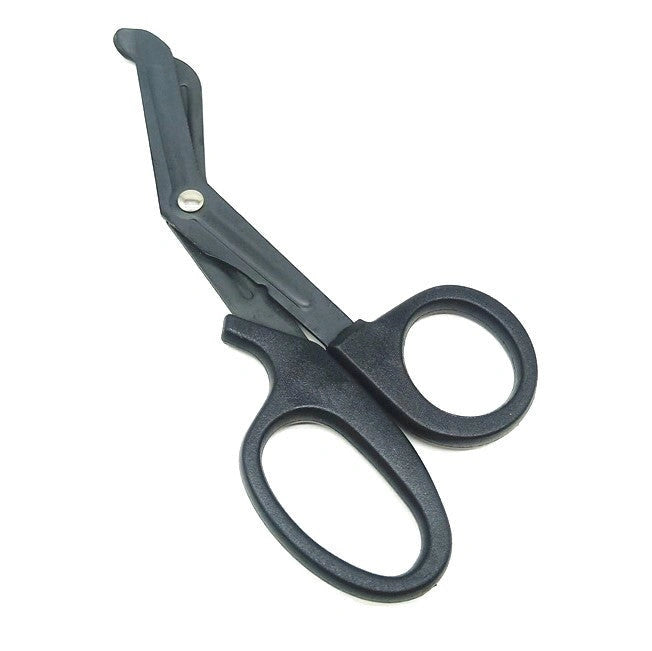
The titanium coated trauma shears from MedTechKits are designed for EMS students who want a tool that keeps up with heavy training use across semesters and rotations.
The titanium coating over the stainless steel blade delivers a cutting edge that resists dulling even after repeated contact with thick clothing, tape, and synthetic gear.
Rounded tips keep the shears safe to use in close proximity to a patient, which is a feature that matters especially during simulation scenarios.
The non-slip curved handle adds another layer of reliability by giving the user a stable grip even when hands are gloved or conditions are less than ideal.
At 7.5 inches, the blade length hits a practical balance between reach and control that works across a wide range of assessment tasks.
The 7.5" Stainless Steel EMT Shears: The Economical Option
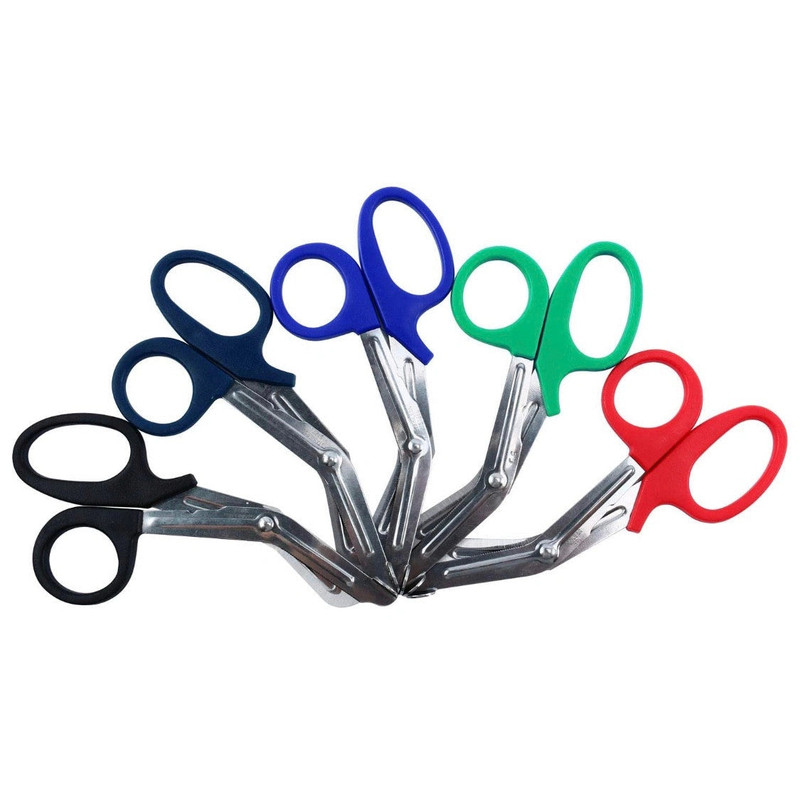
The stainless steel EMT shears from MedTechKits offer EMS students a dependable cutting tool built from solid stainless steel at a more accessible entry point.
These shears carry the same rounded tip design and non-slip curved handle found on the titanium model, meaning the core safety and ergonomic features remain consistent across both options.
The shears are easy to identify in a packed kit or clinical bag, which is a small but practical advantage during training.
Stainless steel as a blade material is straightforward to clean and maintain, and with proper care it holds up well across regular use.
Handle Design and Grip: What Both Models Get Right
Both MedTechKits trauma shear models share a non-slip curved handle design that gives the user confident control during assessment tasks regardless of hand size or glove type.
The curve in the handle keeps the blade angled naturally away from the patient surface, which reduces the effort required to maintain a safe cutting path without awkward wrist positioning.
This ergonomic consideration becomes particularly important during extended simulation sessions where fatigue can affect technique.
The non-slip surface on the handle ensures that grip does not degrade when hands are wet, gloved, or under stress, which mirrors the real conditions these tools are expected to perform in.
Which Trauma Shears Should You Buy as an EMS Student
When considering how long does it take to become an EMT, investing in durable gear early in your training ensures your equipment lasts from day one of class through certification and into the field. The right choice depends on balancing immediate training needs with long-term career goals.
The titanium coated trauma shears suit students who train consistently, want a primary pair that holds up across multiple semesters, and are looking for a tool they can carry confidently into clinical environments.
The stainless steel EMT shears make the most sense for students who are building out their kit for the first time, want a dependable backup pair, or are looking for a solid entry-level option that does not sacrifice essential features.
How to Care for Your Trauma Shears Between Uses
Proper care of trauma shears extends their functional life significantly and ensures they are ready to perform when needed without hesitation.
After each use, shears should be wiped clean with an appropriate disinfectant wipe or cloth to remove any biological material or moisture that could affect the blade or the hinge mechanism over time.
Keeping shears in a dedicated pouch or pocket within a kit protects the blade edge from contact with other tools and reduces the risk of accidental dulling.
Frequently Asked Questions
1. Can these trauma shears handle thick clothing and gear during emergency situations?
Yes, both trauma shears are designed to cut through heavy clothing commonly encountered during patient assessments, including denim, winter jackets, and layered garments. The titanium-coated version performs especially well on tougher materials because its harder blade surface helps maintain cutting efficiency.
2. Can I sterilize these shears in an autoclave after use?
The metal blades can tolerate high temperatures, but the synthetic handle material is not intended for repeated autoclave sterilization. Excessive heat may weaken or deform the handles over time. For routine cleaning, most EMS students and clinicians rely on approved disinfectant wipes or chemical disinfection methods.
3. Do these shears stay sharp when cutting medical tape and dressings?
Both models handle medical tape, gauze, and dressings effectively during patient care. Over time, adhesive residue can build up on the blades, which may affect cutting performance if not cleaned regularly.
4. Will the titanium coating wear off or peel with regular use?
No, the titanium coating is bonded directly to the blade surface rather than applied like paint. Under normal use, it will not chip, peel, or flake away. Its primary purpose is to improve durability, reduce friction, and help the blades maintain their cutting performance over time.