Cornwall is traditionally known in British folklore as the "Land of Giants."
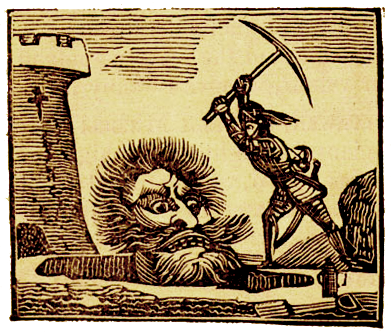
Cornwall is traditionally known in British folklore as the "Land of Giants." Cornish mythology is densely populated by these towering figures, which ancient people used as a creative way to explain the county's dramatic geological features, massive granite boulders, and mysterious prehistoric stone monuments.
The presence of giants in Cornwall and Britain was officially written down, preserved in state records, and taught as literal historical fact for hundreds of years. Long before modern academic structures reclassified these texts, the foundational history books used in schools and universities across the realm presented giants as an absolute, unfiltered reality of Britain's origins.
For centuries, English and Cornish education relied on official chronicles that explicitly documented giants: The Historia Regum Britanniae (1136): Written by Geoffrey of Monmouth, this was the primary historical text of the Middle Ages.
It was treated as authoritative history, stating plainly that before human civilization, the island was called Albion and was populated entirely by giants. The Prose Brut (Chronicles of England):
This was the most widely read and printed secular history book in the 15th and 16th centuries. It served as the standard textbook for English history, mapping out the chronological reigns of rulers, beginning directly with the physical eradication of the island's giant population. In the educational systems of the medieval and early modern eras, students were taught a very specific, unfiltered timeline of Cornwall's founding: The Trojan Arrival: Around 1100 BC, Brutus of Troy arrived to settle the island.
The Stronghold of Cornwall: The historical chronicles stated that the far southwest corner (Cornwall) was given to Brutus’s top general, a warrior named Corineus, specifically because it had the highest concentration of enormous giants. The Hand-to-Hand Battles:
History lessons detailed literal, documented wrestling matches between humans and giants, culminating in Corineus throwing the chief giant, Gogmagog, over a cliff to his death.
The land was named Cornwall in direct tribute to this historical victory. How Modern Academia Filtered the Record The shift away from teaching this as absolute fact happened during the 19th-century Victorian educational reforms. As modern academic frameworks were established, institutions implemented new "filters" for historical validation:
They mandated that history could only be verified by physical contemporary documents or classical Roman and Greek texts. Because the pre-Roman era relied heavily on British and Celtic scribes whose writings mixed physical events with the supernatural, academia collectively systematically scrubbed these records from history curricula, moving them into the newly invented category of "folklore and mythology."
Because the pre-Roman era relied heavily on British and Celtic scribes whose writings mixed physical events with the supernatural, academia collectively systematically scrubbed these records from history curricula, moving them into the newly invented category of "folklore and mythology."
In 1586 the antiquary William Camden (1551–1623), in a description of Plymouth, refers to ‘Corineus’s fabulous wrestling match with the giant Gogmagog in this place…’ (Camden, 1586, p. 81).
He continues, in Philemon Holland’s translation of the original Latin: As for that rock from whence, they say, this giant was cast down, it is now called the Haw, a very hill standing between the town and the Ocean, on top whereof, which lieth spred into a most pleasant plaine, there is a right delectable and goodly prospect every way... (Camden, 1610, p. 200) Others of Camden’s contemporaries agreed that the fi ght between Corineus and Gogmagog took place on the Hoe. Edmund Spenser, in the second book of The Faerie Queene (1590), writes of:
The western Hogh, besprinkled with the gore Of mighty Goëmot, whom in stout fray Corineus conquered, and cruelly did slay. (Spenser, 1977, p. 260) And Michael Drayton, writing in 1612, also sets the battle ‘Upon that lofty place at Plymouth called the Hoe’ (Drayton, 1876, p. 16). Thus, at the end of the sixteenth century, the belief that Plymouth Hoe was the place where Corineus fought and killed the giant was more than just a local Plymouth story.
This belief apparently received physical expression in the existence on the Hoe, cut into the turf, of the figures of two giants, one of them (or both) known, at least by the late fi fteenth century, as ‘Gogmagog’ or ‘The Gogmagog’.
What seems to be the earliest account of these figures, and indeed the fi rst to localise the giant’s fall in this place, is in the work of John Rous (c.1420–1492), historian and antiquary of Warwick. In his Historia Regum Angliae, begun in about 1480 and completed in 1486, Rous provides a novel account of the arrival of Brutus and his Trojans (my translation from the Latin): And so when Brutus, a man of noble Trojan blood, landed […], on his first arrival on the sea shore at Plympton he was met by giants.
There were more than sixty of them, though they had no weapons. The Trojans killed them with arrows, except for the captain of them all, called Gogmagog, who made a great impression on the Trojans because of his huge stature; he was saved for the time being, since Brutus wanted to see a wrestling match between him and Corineus, who was a fire with eagerness to get to grips with such monsters. (Rous, 1716, p. 15)
https://payhip.com/b/WT24o The Last of the Old World Giants.. Better quality unlimited shares.
The Last of the Old World Giants https://payhip.com/b/zX9oW
The Last of the Old World Giants looks at the hidden relatively recent history of Giants! Over 100 giants researched, named and remembered. Many more remembered only due to photographs that exist and are sometimes hidden by archive vaults. Tartaria and Tartarian giants, Circus and Military Giants, Giants in 18th and 19th century newspapers, Giants remains found and reported by media. Giant Warriors, Giants in Siberia, Giants in Asia, Magog and Gog, Gargantua AND MUCH MORE.. Over 800 pages, tons of photographs.