Humanoid robots presented at the Humanoid Summit 2026

Humanoid robots presented at the Humanoid Summit 2026


There is a curious question that has accompanied robotics for decades: if we are building machines for the future, why do we insist on making them look like us? The answer began to appear more clearly during the Humanoid Summit 2026 held in Tokyo. For two days, some of the most advanced companies on the planet presented robots capable of executing tasks that require a level of precision, coordination and resistance, which until recently were considered exclusive to human beings.


But the most interesting thing is that many of these projects are no longer being developed solely to live on Earth, they are being created to work where humans find their greatest limits, space, as space agencies accelerate plans to build permanent bases on the Moon and in the future on Mars, a little discussed problem arises, highly trained astronauts end up spending a significant part of their time performing maintenance, transporting equipment and repetitive operational tasks.


In an environment where every minute is worth a fortune, this represents an enormous waste of resources, which is why new generations of robots are being designed to take on these functions, some recently presented concepts even abandon their legs. In microgravity environments, walking simply stops making sense. Instead, engineers are betting on machines equipped with multiple articulated arms, systems inspired by biological tendons and mechanisms capable of anchoring themselves in space structures while carrying out complex repairs autonomously.


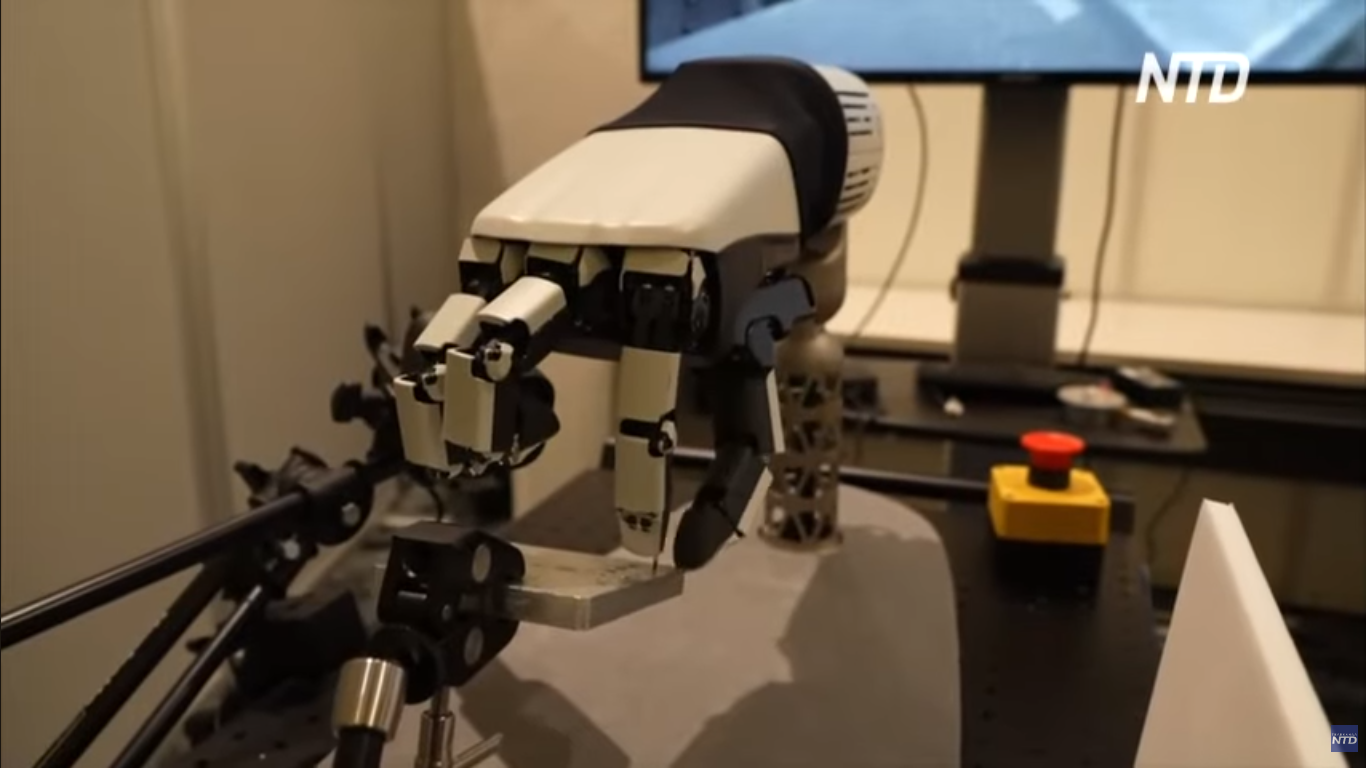
And for all this to work, there is a fundamental skill that must be mastered first, the precise manipulation of objects, it was precisely at this point where Tokyo caught the world's attention, among the most impressive demonstrations of the event was a new generation of robotic hands capable of performing extremely delicate movements, in one of the presentations, a robot managed to execute a task that requires fine coordination even for humans, passing a thread through the small hole of a needle. causing no damage to parts may seem simple, but this type of skill is exactly what will be needed to assemble structures in space, perform repairs on satellites, or even build future facilities using materials mined directly from the lunar surface.


At the same time, the summit revealed an increasingly intense technological dispute, while Japanese companies continue to bet on mechanical precision and industrial reliability, Chinese manufacturers advance rapidly in scale production and cost reduction, companies such as Unitree and Booster Robotics exhibited platforms focused on rapid commercial adoption, while new models destined for airports, logistics centers and industrial environments showed that physical automation is already leaving laboratories to enter everyday life.


For countries like Japan that face one of the oldest populations on the planet, that transformation is not just a technological issue, it is an economic and social necessity, perhaps that is exactly what makes the current moment so fascinating, the robots presented in Tokyo are not only learning to replace human tasks, they are being prepared to operate in places where humans themselves have difficulty surviving, from smart factories to future lunar cities, we are witnessing the birth of machines designed not to copy the limits of the human body, but to overcome them.


Sorry for my Ingles, it's not my main language. The images were taken from the sources used or were created with artificial intelligence
