Middle East Tensions Escalate as Trump Signals Stronger Action
🚨 Middle East Tensions Escalate as Trump Signals Stronger Action Against Iran
A new wave of tension has emerged in the ongoing U.S.-Iran confrontation after former U.S. President Donald Trump reportedly stated that the United States would strike Iran "very hard tonight" and suggested that Washington could seek control of Kharg Island and key Iranian oil facilities in the near future.
The remarks have triggered widespread debate, with analysts questioning the rationale behind further escalation if, as Trump has also claimed, Iran's military infrastructure has already suffered severe damage.
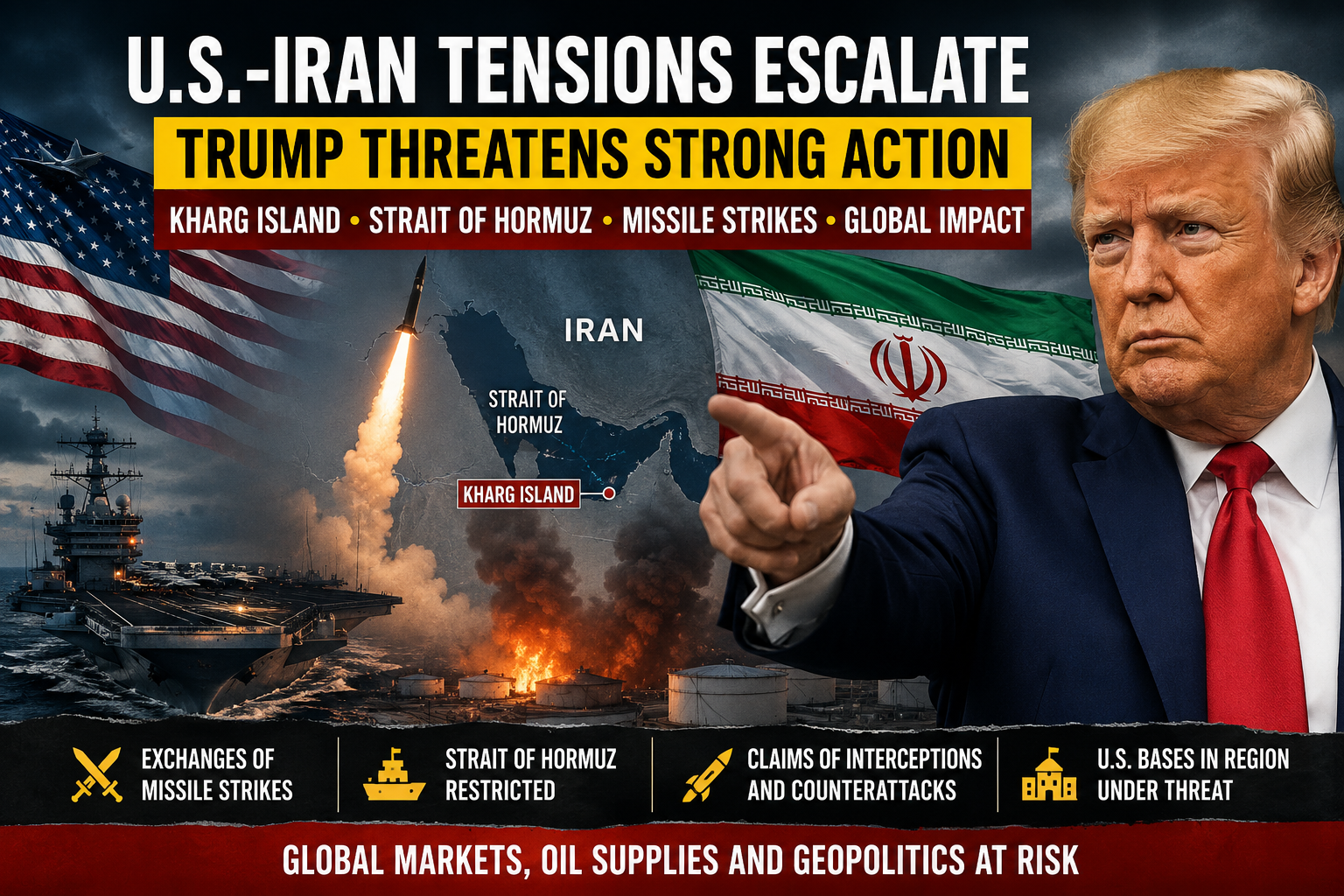
According to reports, both sides have continued exchanging attacks over the past several days. Iranian sources claim that Tehran has launched strikes against multiple U.S. military installations across the Middle East, while the United States has reportedly targeted strategic locations linked to Iran's regional military capabilities.
One of the major developments concerns the Strait of Hormuz, a vital global energy corridor. Iranian authorities have reportedly announced restrictions on maritime traffic through the waterway, while Western tracking agencies continue monitoring the situation. Military analysts suggest that control of Hormuz remains central to the strategic calculations of both sides.
Questions have also emerged regarding reports that Iran intercepted U.S. Tomahawk cruise missiles during recent strikes. Iranian media have claimed successful interceptions, while U.S. military officials have reportedly disputed elements of those accounts, leading to conflicting narratives about events on the ground.
Meanwhile, several international media outlets have focused on what they describe as growing frustration within Washington. Commentators from both Western and regional news organizations have suggested that the prolonged nature of the conflict may be increasing pressure on U.S. decision-makers.
Speculation is also growing over the strategic importance of Kharg Island, Iran's primary oil export hub. Some regional analysts argue that any attempt to seize or control the island could dramatically expand the scope of the conflict and potentially trigger a stronger Iranian military response.
Beyond the battlefield, the confrontation is fueling broader debates about military spending, global influence, and the future of the international arms market. Some experts argue that the conflict is reshaping perceptions of military technology, missile defense systems, and regional power balances.
As uncertainty continues, analysts remain divided on the ultimate outcome. Supporters of Iran's position argue that Tehran's objective is simply to endure and survive sustained pressure, while others believe the conflict could enter a more dangerous phase if military operations intensify further.
For now, the world is watching closely as both sides appear unwilling to back down, raising concerns that the crisis could expand beyond its current scope and have significant consequences for regional and global stability.