The Future of Freedom: Why Web3 Social Media is Replacing Big Tech
Imagine spending hours researching, writing, and formatting a beautiful article, only for a hidden algorithm to hide it from your followers. Or worse, waking up to find your account suspended with no explanation and no way to appeal.For over a decade, traditional social media networks have operated like digital feudal kingdoms. We, the users, provide the free labor (the content), while a small handful of tech billionaires reap 100% of the financial rewards.But a massive shift is happening right now. The era of centralized Big Tech exploitation is fading, and the age of decentralized, user-owned social media—Web3—is officially here.
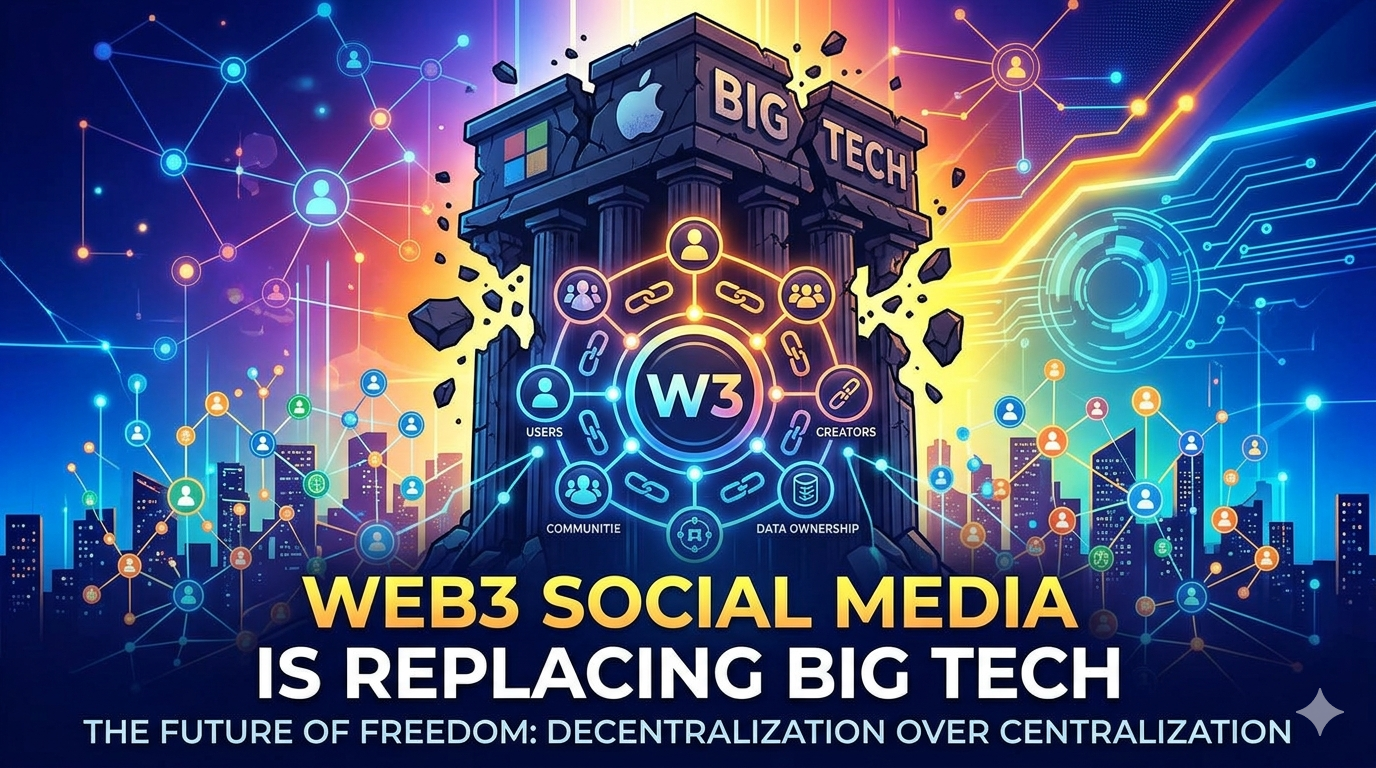
The Big Problem with Web3's Competitors
On legacy platforms, your data is the product. Every click, scroll, and personal preference is packaged and sold to advertisers. You are forced to look at intrusive ads, yet you never see a single dime of that ad revenue.Furthermore, centralized platforms hold absolute control over your voice. If your opinions do not align with their shifting corporate guidelines, your reach is instantly throttled. You do not own your audience, your content, or your digital identity.
Enter the Revolution: Ownership and Value
Web3 platforms like Steemit completely flip this broken model on its head. Instead of treating creators like products, blockchain-based networks treat users like shareholders.
Here is how decentralized social media fixes the internet:
Direct Monetization: You do not need thousands of followers or corporate sponsors to start earning. Your rewards come directly from the community via blockchain-backed upvotes.
True Content Ownership: Your posts are permanently written onto an immutable ledger. No single corporation can delete your hard work or take down your profile on a whim.
Curation is Rewarded: You do not even have to write to be a valuable part of the ecosystem. By reading, filtering, and upvoting high-quality work, you earn curation rewards. This creates a mutually beneficial economy where everyone wins.
The Road Ahead
We are still in the early days of this digital renaissance. Transitioning from traditional social networks to the blockchain requires a mindset shift. It requires us to value our data, protect our privacy, and demand fair compensation for our creativity.The internet was originally created to democratize information, not to enrich a few giant corporations. By moving to decentralized platforms, we are finally taking the power back.What do you think? Will Web3 completely replace traditional social media by the end of the decade? Let me know your thoughts in the comments below!