Fast KYC Crypto Card Access: Balancing Convenience and Controlled Data Exposure
Getting started with crypto payments often becomes harder than expected. Many users face a familiar issue: long onboarding processes that require extensive personal data before even testing how a crypto card works.
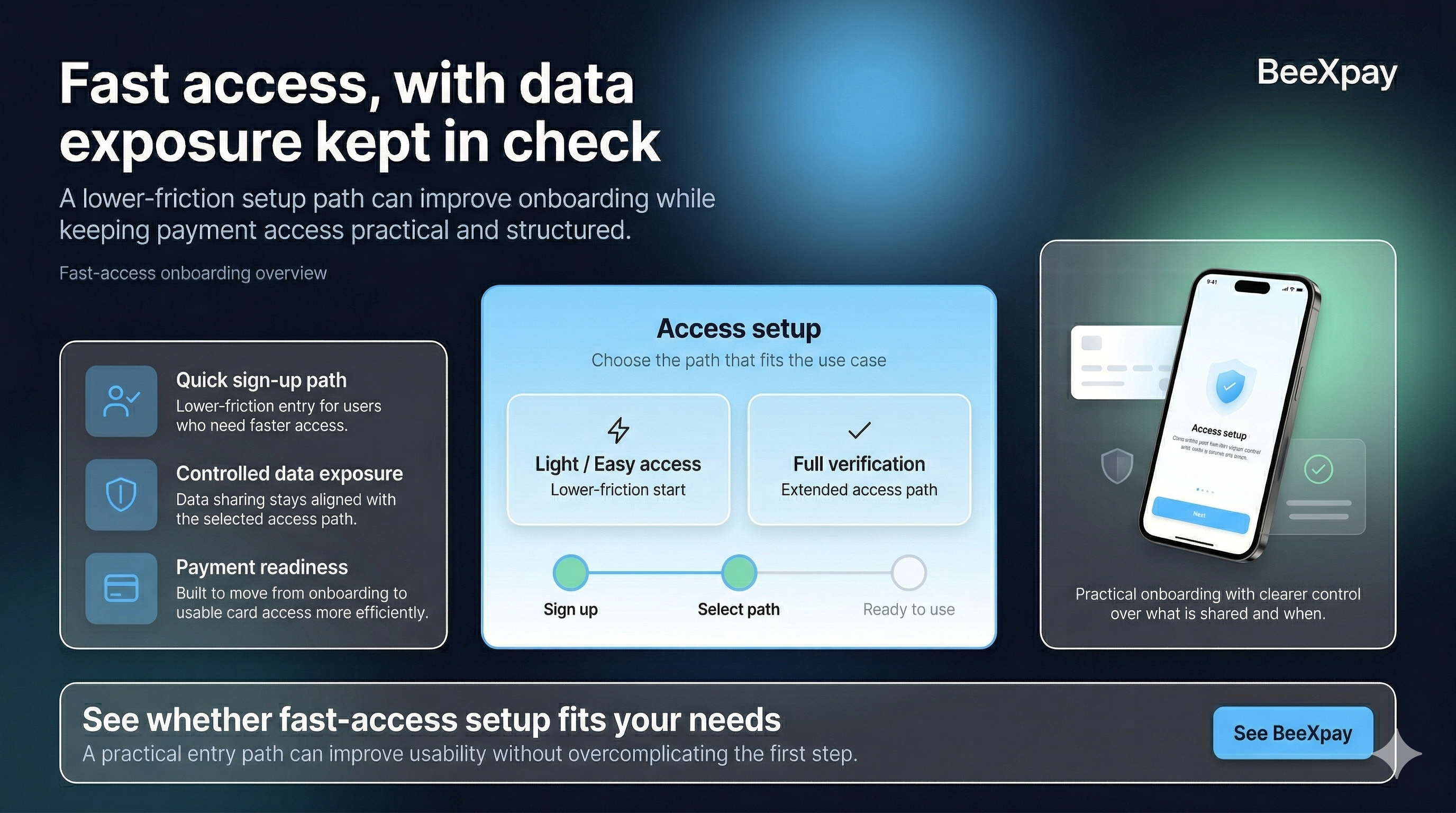
This is where the concept of a fast KYC crypto card becomes relevant.
The Real Problem: Onboarding Friction in Crypto Payments
Crypto promises accessibility, but onboarding often introduces delays. Users may need:
Multiple identity checks
Document uploads
Waiting periods before activation
For someone who simply wants to test crypto payments or make a small transaction, this process can feel excessive.
What Low-Friction Onboarding Actually Means
Low-friction onboarding is not about avoiding compliance. It is about aligning verification with usage.
A structured approach typically includes:
Entry-level access with limited requirements
Gradual verification for expanded features
Clear transition between access levels
This allows users to start quickly while maintaining a pathway toward full compliance.
Controlled Data Exposure in Practice
Privacy-focused payments are not about eliminating identity checks. Instead, they focus on limiting unnecessary data exposure at early stages.
For example:
A user testing a virtual card may not need full verification immediately
A frequent user may choose to complete full KYC for broader access
This approach gives users control over how much information they share and when.
Where BeeXpay Fits
BeeXpay operates as a crypto-funded payment access layer with two distinct onboarding paths:
Telegram Mini App for Light/Easy KYC
Mobile app for Full KYC
This structure allows users to begin with lower friction and move toward full verification based on their needs.
Virtual and physical cards are available, with physical cards tied to the Full KYC route.
Practical Example
A user traveling abroad may need quick access to a crypto-funded card:
Starts with Light KYC via Telegram
Uses a virtual card for immediate payments
Upgrades to Full KYC later if physical card access is needed
This staged approach reduces delays while keeping compliance intact.
Final Thought
Crypto usability depends not just on access, but on how that access is structured. Flexible onboarding models are becoming an important part of payment infrastructure.
Question: Should crypto cards require full verification upfront, or adapt based on usage?
See how access paths are structured:
https://beexpay.app