Why Bitcoin Is Trading Like a Tech Stock Right Now (And What That Means for Crypto Traders)?
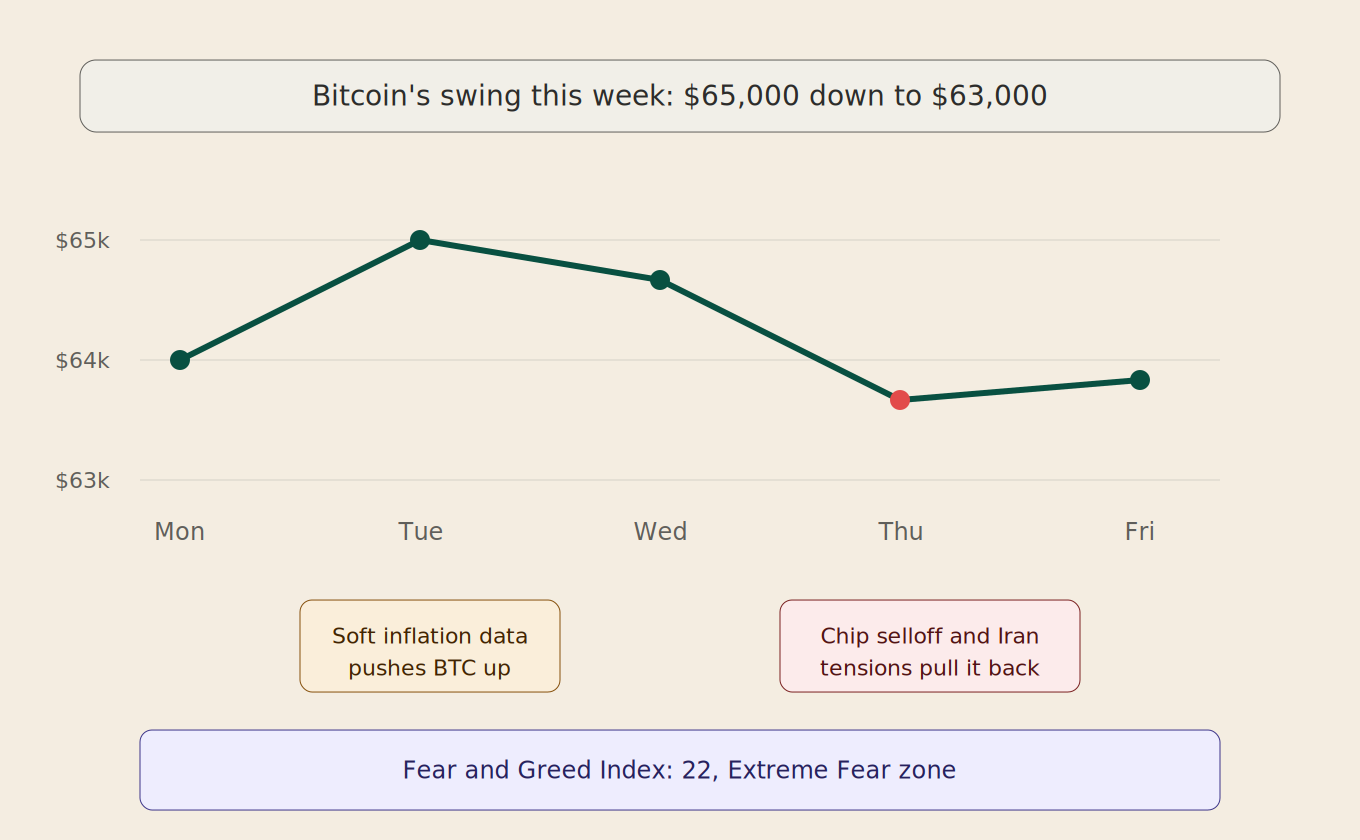
The Move:: Crypto traders got a wake-up call this week. A deepening global sell-off in chipmakers dragged risk assets lower, pulling Bitcoin back down from the $65,000 level it had just reached on softer inflation data. Bitcoin fell as AI stock fatigue and U.S.-Iran tensions weighed on sentiment, even as a technical measure hinted at oversold conditions heading into the weekend.
To put the swing in perspective: Bitcoin was nearing $65,000 just days ago as crypto rallied on softer inflation data, with spot Bitcoin ETFs pulling in over $180 million in a single day. Within 48 hours, that same market had reversed hard enough to pull Bitcoin back toward the $63,000 level, with sentiment tools like the Fear and Greed Index sitting at 22, deep in "Extreme Fear" territory.
Question: Why does Bitcoin keep moving in lockstep with tech stocks and oil, instead of acting like an independent "digital gold"?
This is the real lesson buried in this week's price action. Bitcoin is increasingly trading as a risk asset, not a hedge — meaning it moves with stocks during stress, not against them.
Three forces are colliding right now, and Bitcoin is caught in the middle of all three::
1:: The AI/chip sell-off spilled over into crypto. The same investors rotating out of overheated semiconductor names are also the ones holding risk assets broadly — when chip stocks fall hard, crypto often falls alongside them, not because of anything crypto-specific, but because of shared ownership and shared risk appetite.
2:: Middle East tensions are pressuring both oil and crypto simultaneously. Rising U.S.-Iran tensions pushed both oil prices up and risk assets like Bitcoin down at the same time — a classic "flight from risk" pattern where investors de-risk across the board, crypto included.
3:: Rate expectations are working against crypto too. The same hawkish Fed pricing that's pressuring gold and rate-sensitive stocks is doing the same to crypto, since digital assets, like growth stocks, tend to get squeezed when the market prices in higher-for-longer interest rates rather than cuts.
The Divergence Worth Watching::
Not every part of the crypto market is moving the same way, and this is where it gets genuinely interesting for traders:
1:: Bitcoin ETFs had snapped a 10-day losing streak just last week, pulling in over $221 million in their largest daily haul in two months — showing institutional demand hasn't fully disappeared, even during the sell-off.
2:: Ethereum ETFs, meanwhile, have recently seen inflows even while Bitcoin ETFs saw outflows in prior sessions — a sign of rotation within crypto, not a full exit from the asset class.
3:: Solana has fallen roughly 75% from its all-time high, with sentiment hitting its most negative reading of the year, yet the network still processed over 1 billion transactions in a single week — a reminder that price action and network usage don't always move together.
Takeaway for Learners:: The biggest myth in crypto trading is that Bitcoin always behaves like "digital gold" — a safe haven that rises when everything else falls. This week proved the opposite: when tech stocks sold off and geopolitical risk spiked, Bitcoin fell right alongside them. The real skill isn't picking a side on whether crypto is a hedge or a risk asset — it's recognizing which one it's behaving like in the current environment, because that changes completely depending on what's driving the broader market that week.
Let's learn together!