How I'm Farming Hyperliquid HIP-3 with 15 Wallets in 2026 (Full Browser + Proxy Stack)
HIP-3 went live on Hyperliquid mainnet on October 13, 2025. As of last week, the network-wide HIP-3 open interest sits at $2.56B according to loris.tools, and cumulative volume since launch has crossed $25 billion. Trade.xyz alone represents over 90% of HIP-3 open interest with tokenized stocks like Tesla, Nvidia, Apple, and a synthetic Nasdaq index. Kinetiq has launched its "Launch" platform, Ventuals went live with prediction-style perps, Dreamcash brought mobile-native trading, and newer entrants like Aura and Paragon keep arriving.
Each one of those builders is a potential token issuer. None of them has airdropped yet. That is the whole opportunity.
I run 15 wallets across HIP-3 markets because spreading volume across multiple wallets and multiple builders is the only sensible way to position for whatever distributions come next, without committing six figures to a single address. The hard part is not the trading. The hard part is keeping those 15 sessions operationally independent so nothing about my fingerprint, IP, or behavioral signal links them as one operator. This post is the stack I actually use.
Why Multi-Wallet HIP-3 Trading Needs Browser Hygiene
HIP-3 markets inherit HyperCore's order book and margining. From the trader side that means everything routes through the same execution stack — the deployer just configures parameters. So when you trade Trade.xyz from wallet A and Kinetiq from wallet B on the same machine, both deployers see the same browser fingerprint hitting their frontend. Trade.xyz sees a TLS handshake. So does Kinetiq. Both can fingerprint the canvas hash, audio context, WebGL renderer, and font list. Both see the IP.
A deployer who wants to filter sybil clusters from their eventual airdrop distribution does not need to break any blockchain assumption. They just need to query their own frontend logs. Same canvas hash across five wallets that all deposited via the same Arbitrum bridge in the same hour? That cluster is gone.
This is why I do not use one Chrome profile with switched MetaMask accounts. Different profile, different fingerprint, different IP, different funding path. Every time.
Layer 1: Profile Isolation with BitBrowser
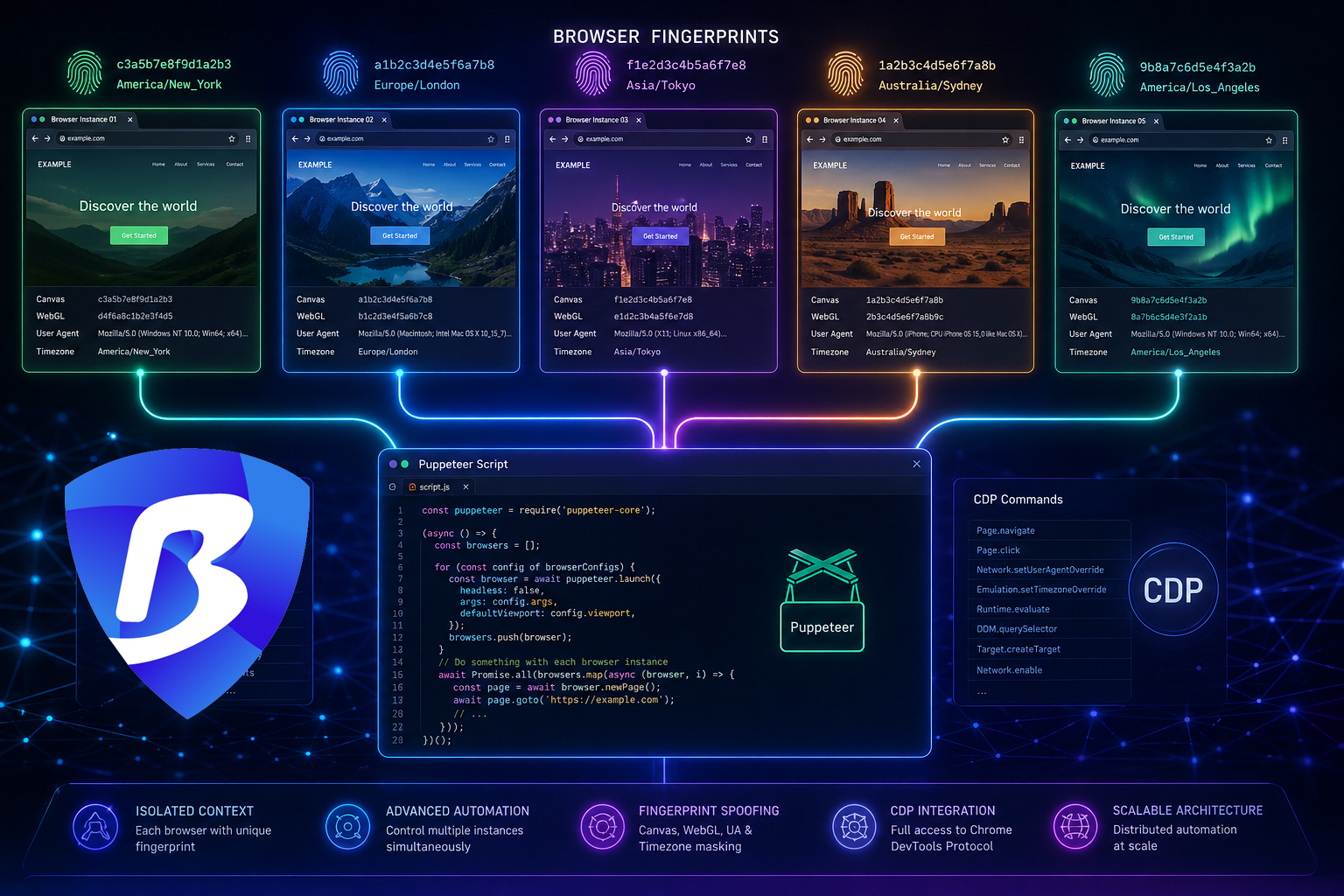
The base layer of my stack is BitBrowser. I picked it for two reasons: the free tier gives 10 permanent profiles which covered my first 10 wallets, and the fingerprint persistence is genuinely stable across sessions. A profile I created in November still loads with the same canvas hash, WebGL renderer, screen resolution, font list, audio context, and timezone today.
What I configure per profile:
- OS + browser version mix. Not all 15 profiles are Chrome on Windows 11. I have Chrome 131 on Windows, Chrome 130 on macOS, and Edge 131 on Windows scattered across the set. Trade.xyz and Dreamcash get different OS distributions in my data on purpose.
- Timezone matched to proxy. Profile bound to a US East residential IP gets America/New_York. Profile on a Singapore IP gets Asia/Singapore. Mismatched timezone is the easiest tell.
- Language headers consistent with geo. en-US for US, en-SG plus zh-CN for Singapore.
- Hardware concurrency varied. 4, 6, 8, 12 cores spread across profiles. Same number on every profile is a flag.
- WebRTC blocked. This is non-negotiable. Open the profile, run a leak test on browserleaks.com, confirm no local IP is exposed.
BitBrowser stores all of this server-side, so I can sign into the dashboard from any machine and the 15 profiles load with the exact same configuration. I have rotated between my desk and a laptop while traveling and not lost a single fingerprint.
The pricing matters here. I am on the 50-profile plan, which sits well under what GoLogin or Multilogin charge for equivalent profile counts. For airdrop farming where ROI is uncertain by definition, that cost difference is real.
Layer 2: Residential Proxies, One Per Wallet
Every wallet gets its own residential IP. Not shared, not rotating, not datacenter. Sticky residential.
I split my 15 across two providers so I am not exposed to a single provider's ASN being flagged. Geo distribution is roughly:
- 5 wallets on US residential (East and West Coast mixed)
- 4 wallets on EU residential (Germany, Netherlands, France)
- 3 wallets on Singapore and Hong Kong
- 2 wallets on UK
- 1 wallet on a Brazilian mobile IP for variety
The reason for spread is simple. Trade.xyz publishes its open interest. Trade.xyz also presumably tracks IP geography of its volume. A cluster of 15 wallets all on Frankfurt datacenter IPs is a single afternoon of analyst work to delete. 15 wallets across 8 countries on real ISP networks is not.
Each proxy is bound to its BitBrowser profile in the proxy config slot. I never let the profile launch without the proxy connection confirmed. If the residential proxy drops, the profile closes. I learned this the hard way after a proxy outage briefly exposed two profiles on my real Morocco IP for about 90 seconds. Both wallets got reset and refunded from a fresh deposit path, which cost me about $40 in gas across two chains. Cheap lesson.
For HTTP vs SOCKS5: SOCKS5 every time. HTTP proxies leak DNS in too many corner cases.
Layer 3: Hardware Wallets and Funding Path Separation
The on-chain layer is where most farming guides stop and where most clustering actually happens. I use three Ledger Nano devices, splitting the 15 wallets across them by derivation path. Each device generates 5 addresses on independent derivation paths.
Funding rules I follow strictly:
No wallet funds another wallet. Ever. Each wallet gets USDC from a different source: some from a centralized exchange, some from a P2P swap, some from a stablecoin payment for unrelated work. Three different CEX accounts in three different jurisdictions feed the cluster.
No consecutive bridging. If wallet 4 bridges $2,000 USDC from Arbitrum to Hyperliquid at 14:23, wallet 5 does not bridge at 14:24. There is a minimum 6-hour gap between any two wallets touching the bridge, often more.
Different bridges where possible. Hyperliquid's native bridge from Arbitrum is the default, but I route some funds through deBridge first or through a CEX direct-to-HyperEVM path when available.
Variable position sizes. Wallet 1 trades $5k. Wallet 7 trades $1.2k. Wallet 12 trades $400. If all 15 wallets posted identical $2,000 collateral, the clustering would write itself.
No same-block opposing positions. If I am running a delta-neutral pair to generate volume across wallets, the long side fires, then I wait at least 90 seconds, sometimes hop to a different builder DEX, then fire the short.
Layer 4: Mobile Sessions for Dreamcash and Aura
Dreamcash is mobile-first. Aura leans social. Both of them eventually expect mobile interaction signals, and a profile that has only ever touched a desktop fingerprint is going to look thin if mobile activity becomes a snapshot criterion.
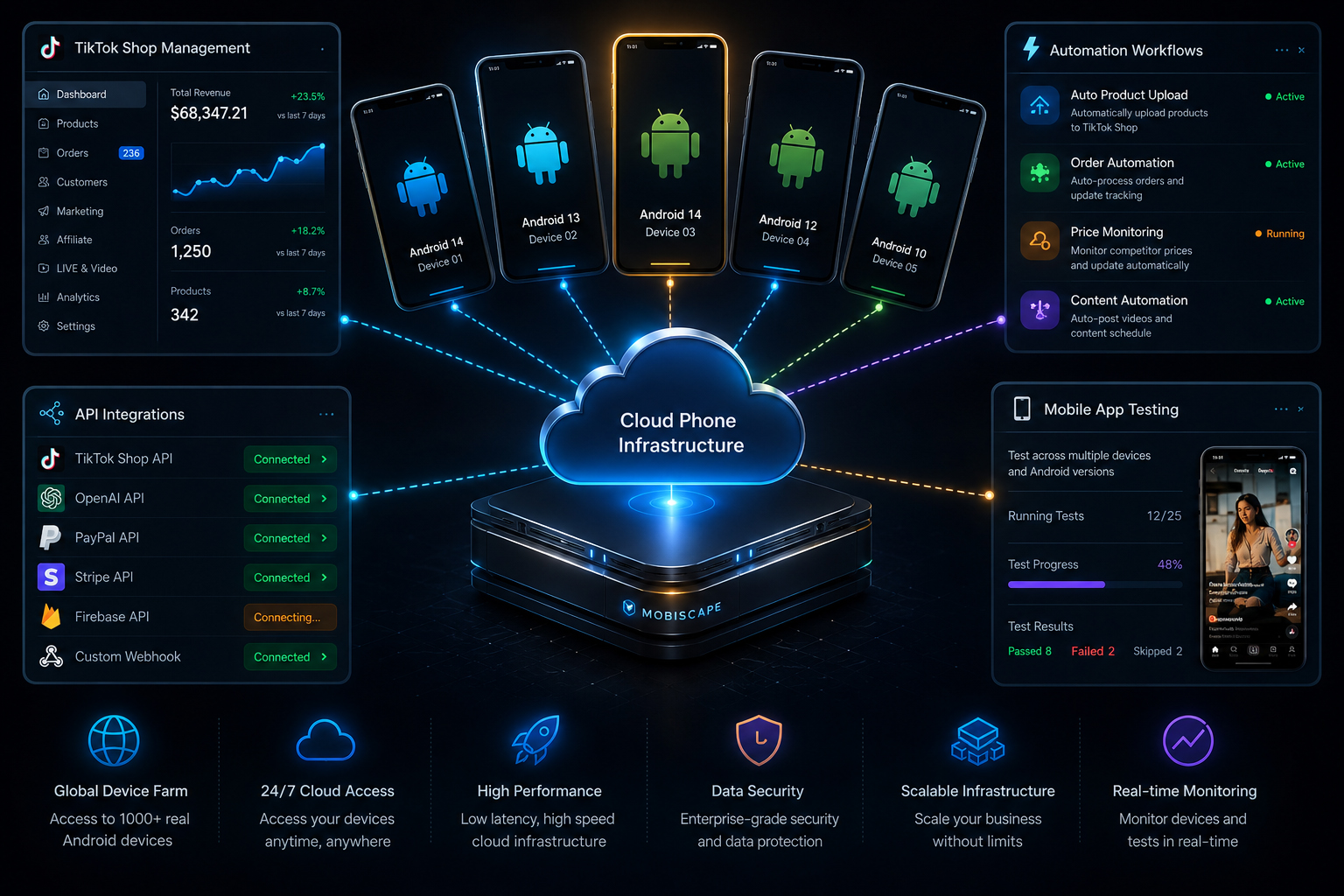
For mobile-side activity I use BitCloudPhone. Each cloud Android instance gets its own device identifiers — IMEI, Android ID, device model, GPS coordinates. I run one cloud phone per cluster of 3 wallets, signing into Dreamcash and Aura from mobile sessions on a rotating schedule. The phone sessions check positions, sometimes open small trades, occasionally just scroll the order book for two minutes. They behave like a person who installed the app on their commute.
This is the single biggest upgrade I made to the setup in early 2026. Before cloud phones, all 15 wallets looked like desktop-only traders. After adding cloud phones for a subset, the behavioral footprint matches what an actual retail user looks like across the Hyperliquid ecosystem.
How I Actually Trade Across the Builder DEXs
The volume-generation strategy is delta-neutral pairs across builders. Two wallets, opposite positions, different DEXs.
A typical session:
- Wallet 3 longs Tesla perp on Trade.xyz, 2x leverage, $1,500 collateral
- 4 hours later, wallet 8 shorts Tesla on Kinetiq, 2x leverage, $1,500 collateral
Net market exposure is roughly zero. Funding rate differential is the only real PnL drag, and I pick pairs where the differential is small. Both wallets accumulate volume credit on different builders. Neither wallet shares a fingerprint, IP, funding source, or timing signal with the other.
I rotate which builders get traded each week. Trade.xyz still gets the most volume because it represents the largest share of HIP-3 OI, but every wallet has touched Kinetiq, Ventuals, and Dreamcash at least three times. Newer builders like Aura and Paragon get smaller positions because their token issuance is more speculative.
Operational Routine
| Activity | Frequency | Notes |
|---|---|---|
| Open a profile | 2-3 wallets/day | Never all 15 same day |
| Trade volume | $500-$3k per wallet/week | Varied amounts |
| Stake HYPE | Per wallet, varied | 50-500 HYPE depending on size |
| Touch HyperEVM | Weekly | Felix, HypurrFi, HyperLend rotation |
| Mobile session | 3-5 wallets/week | Via cloud phone |
| Fingerprint check | Monthly | pixelscan + browserleaks per profile |
What I Would Do Differently
If I were starting today, I would put 20 wallets on the setup instead of 15. The marginal cost of profiles 16-20 on BitBrowser plus 5 more residential IPs is small relative to the upside of qualifying for more builder distributions. I would also start the cloud phone layer earlier — I waited 4 months and the desktop-only signal probably cost me on Dreamcash's early eligibility.
The other thing: do not chase every new HIP-3 builder. There are 15+ deployers now and more arriving. Pick the ones with real volume (Trade.xyz, Kinetiq, Ventuals, Dreamcash) and ignore the long tail. Spreading 15 wallets across 15 builders gives every builder 1 wallet, which is operationally identical to not farming at all.
Stay clean on-chain, stay clean off-chain, and let the snapshots come to you.
![Parallel Sessions.jpg]