🌍 Behind a Successful Cloud Migration: Evrone's Engineering Approach

Many people think cloud migration begins with moving applications. In reality, successful migration begins with understanding every dependency inside a distributed system.
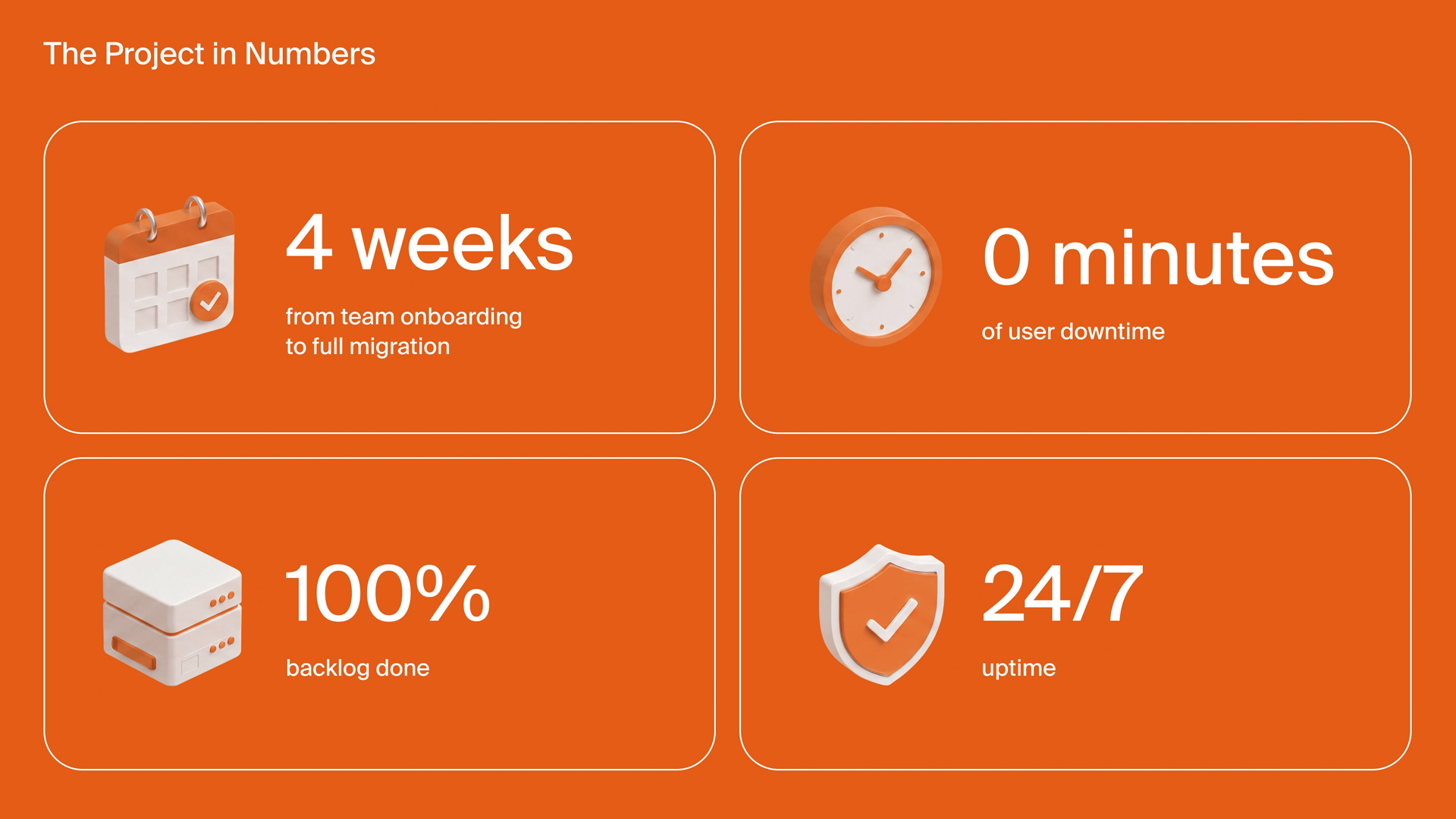
An international transportation platform planned to replace its cloud infrastructure and modernize its internal engineering platform. The timeline was only one month, while customers expected uninterrupted access to booking services around the clock.
Evrone approached the project by reducing uncertainty before any production deployment happened.
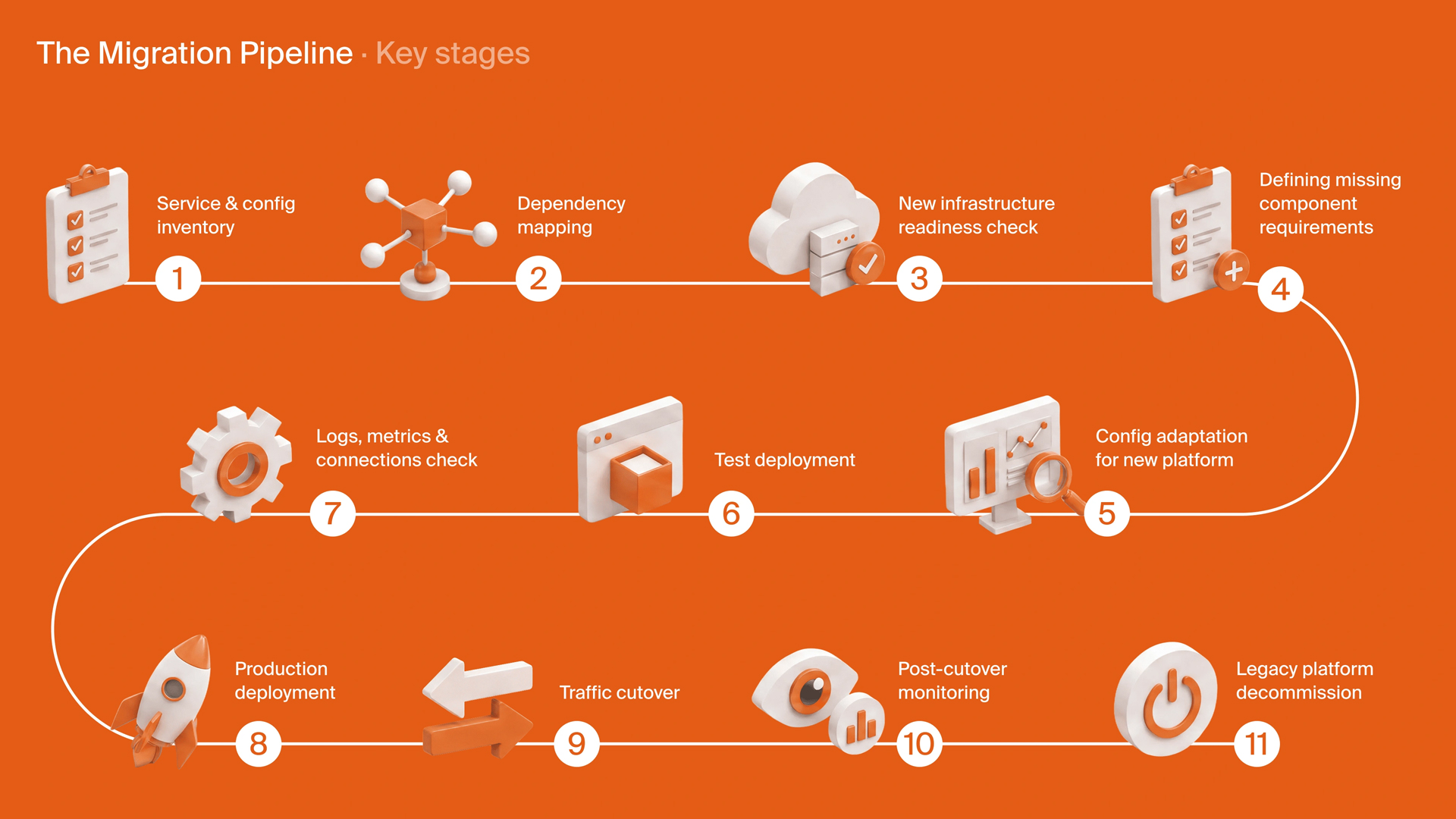
🔍 The audit came first
Evrone engineers examined:
- Kubernetes configurations
- Databases
- Redis instances
- Message brokers
- External services
- Network rules
- Runtime settings
- Hidden service relationships
This investigation uncovered several infrastructure requirements that were absent from the migration documentation. Some services depended on resources located inside specific namespaces, while others relied on external systems that needed additional verification.
⚙️ Building a repeatable workflow
Rather than creating unique procedures for dozens of applications, Evrone introduced one migration process for every service.
✔ Infrastructure validation
✔ Dependency verification
✔ Health checks
✔ Logging review
✔ API testing
✔ Customer scenario validation
✔ Rollback preparation
Every production deployment involved both developers and infrastructure specialists. Decisions were made immediately, allowing teams to solve technical issues without long approval cycles.
🚦Traffic switched only after every validation stage passed successfully. During the transition, legacy services continued running in parallel, providing a safe rollback option whenever necessary.
Thanks to structured preparation, close collaboration, and consistent engineering practices, Evrone completed the migration within the required deadline. The legacy platform was retired, the new Kubernetes environment became fully operational, and customers never experienced service interruptions.
Successful cloud migration is rarely about moving infrastructure. It is about preparing systems carefully enough that users never realize anything has changed.
🚀 Zero Downtime Is Built Before Deployment, Not During It.