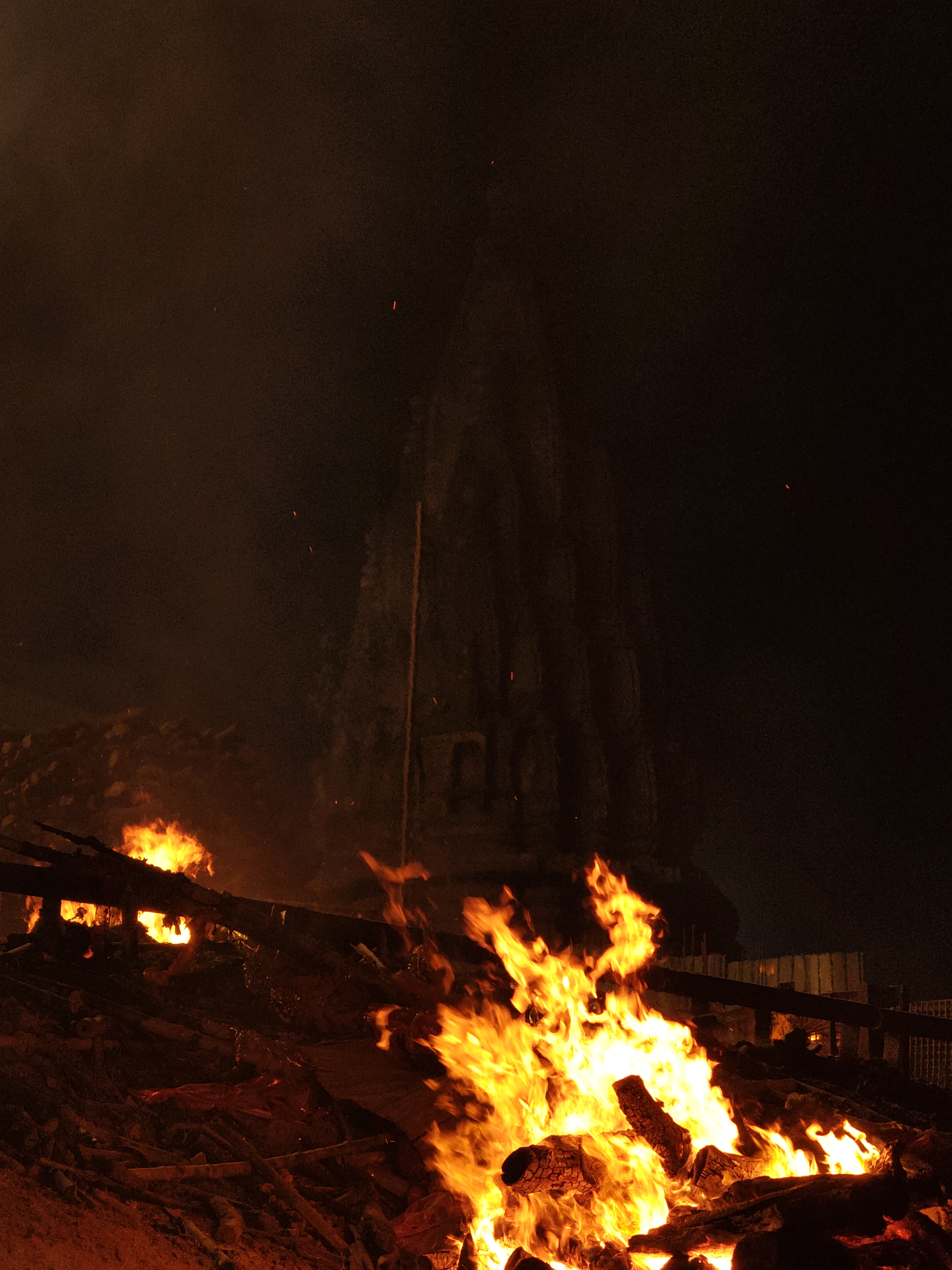
The Night the Smoke Cleared: Finding Shiva at Manikarnika Ghat
They call Banaras the city of the living and the dead, a place where time goes to die, and eternity takes its place. But for me, it was always a destination on a map—until I stood on the stone steps of Manikarnika Ghat in the dead of a winter night, watching the ash of the mortal world rise into the starry sky.
I went to Kashi as a traveler with a camera. I came back as a storyteller who had finally witnessed the true, unvarnished love of Shiva.
The Unending Flame and Silent Grief
Walking into Manikarnika, the MahaShamshana, your senses are instantly overwhelmed. The air is thick with the scent of burning sandalwood, ghee, and something deeply primal. I stood mere feet from the sacred fire managed by the Doms—a flame that has burned continuously for over 3,500 years. To think that this very fire has consumed the earthly remains of generations of ancestors is a thought that humbles you to your bones.
But what struck me the most wasn’t the fire; it was the silence.
There is no loud wailing at Manikarnika. Tradition says tears bind the departing soul back to the earthly realm, so families watch their loved ones turn to ash in absolute, stoic stillness. In that quietude, you see the first layer of Shiva’s love: Destruction is not an end; it is a gentle, necessary release.
The Three Circles of Kashi
As I stood motionless, the smoke swirling around my jacket, I realized that Manikarnika operates in three distinct, overlapping realities:
The Commerce of Death: The practical, almost casual weighing of firewood and the transactional reality of organizing a funeral.
The Mortals' Belief: The absolute, unshakeable conviction that dying here breaks the wheel of cosmic rebirth (moksha).
The Silent Grief: The deeply personal, quiet sorrow of a son or a brother standing by the pyre, contrasted against Aghoris and ascetics who look at the flames and see nothing but the ultimate truth.
Understanding Mahadev's True Love
We often look at love through a human lens—attachment, romance, holding on tight. But Banaras teaches you the divine love of Shiva, which is entirely different. Shiva’s love is the ultimate acceptance.
He does not ask you to be perfect. He takes what the world rejects—the ash, the ruins, the final moments of a human life—and holds it against his chest. At the ghats, you realize that Moksha isn't just a mythological concept; it is Shiva whispering to a tired soul, "You have run far enough. Now, rest in me."
Final Thoughts from the Steps of Kashi
As the sun began to break over the Ganga, painting the water in hues of gold and crimson, the pyres never stopped burning. The smoke kept rising. But the fear of death had left me.
Banaras doesn’t change your life by giving you answers; it changes you by stripping away your illusions. In the firelight of Manikarnika, I didn't just find a great travel story—I found the absolute, unconditional love of Mahadev, waiting for all of us at the end of the road.
Have you ever been to Kashi? What did the ghats whisper to you? Let me know in the comments below.