The Impact of Artificial Intelligence on Digital Life
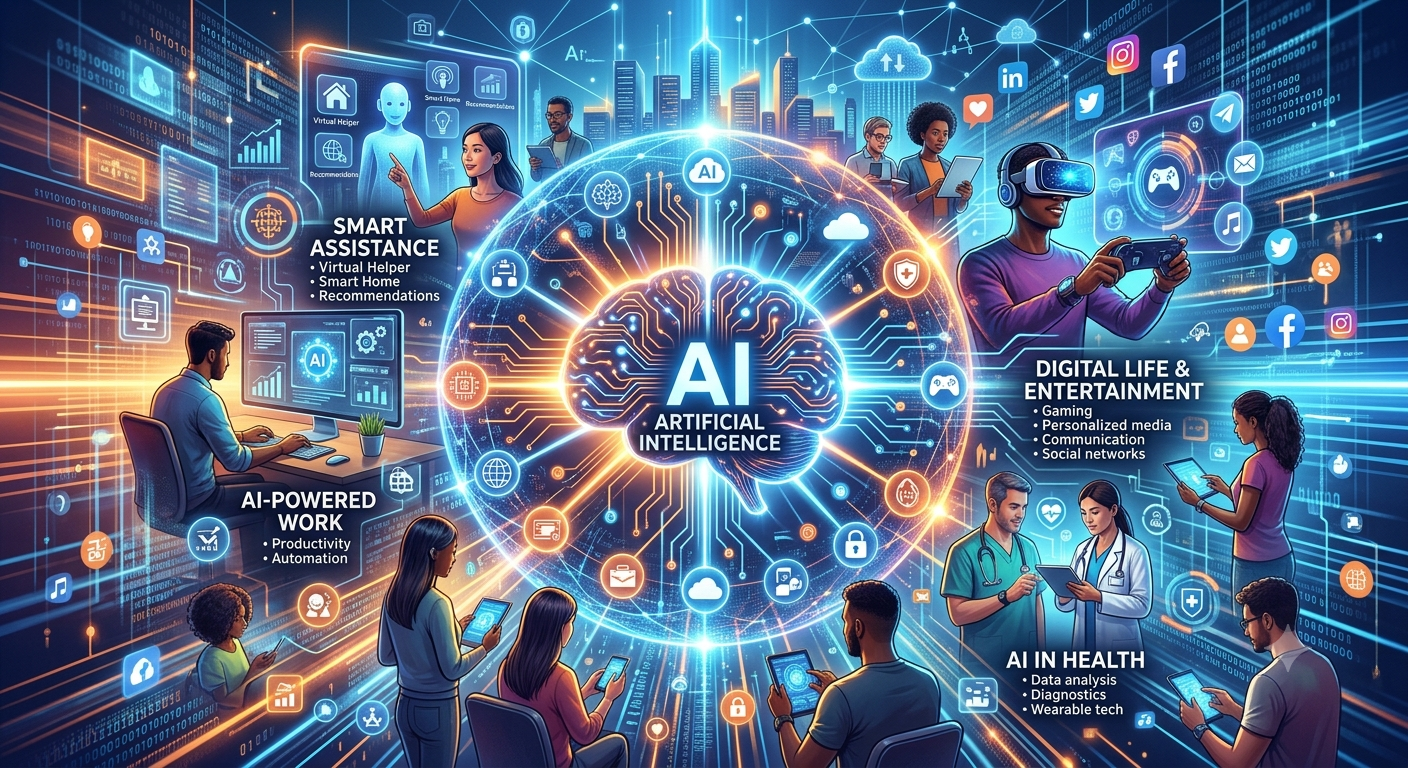
Artificial Intelligence (AI) has become one of the most influential forces shaping modern digital life. From the way we communicate and shop to how we learn and work, AI is quietly embedded in many tools we use every day. Its impact is wide-ranging, bringing both major benefits and new challenges.
- Smarter Everyday Technology
AI powers many applications that people rely on daily. Search engines, recommendation systems, and virtual assistants use AI to understand user behavior and deliver personalized results. Platforms like YouTube, Netflix, and social media apps use AI to suggest content based on preferences, making digital experiences more engaging and efficient.
- Communication and Social Media
AI plays a big role in how we communicate online. It helps filter spam emails, detect harmful content, and even translate languages in real time. Social media platforms use AI to curate feeds, moderate posts, and target advertisements. While this improves convenience, it also raises concerns about privacy and information control.
- Education and Learning
In education, AI is transforming how students learn. Adaptive learning platforms adjust difficulty based on student performance, while AI tutors provide instant feedback. This makes learning more personalized and accessible, especially in remote areas where educational resources may be limited.
- Work and Productivity
AI tools are increasing productivity in workplaces by automating repetitive tasks such as data entry, scheduling, and customer support. In creative fields, AI assists with writing, design, and video editing. However, it also raises concerns about job displacement and the need for new skill development.
- Security and Privacy Concerns
While AI improves digital security through fraud detection and threat analysis, it also introduces risks. Deepfakes, data misuse, and algorithmic bias are growing issues. The use of personal data to train AI systems has led to debates about digital privacy and ethical responsibility.
- The Future of Digital Life
As AI continues to evolve, its role in digital life will expand further. Technologies like machine learning and natural language processing (a branch of Artificial Intelligence) will make systems even more intelligent and autonomous. The challenge for society will be to balance innovation with ethical regulation.
Conclusion
Artificial Intelligence is reshaping digital life in powerful ways. It enhances convenience, efficiency, and personalization, but it also introduces ethical, social, and economic challenges. The future will depend on how responsibly AI is developed and used, ensuring it benefits humanity as a whole.