The AI Revolution: How Artificial Intelligence Is Changing the Job Market
The AI Revolution: How Artificial Intelligence Is Changing the Job Market
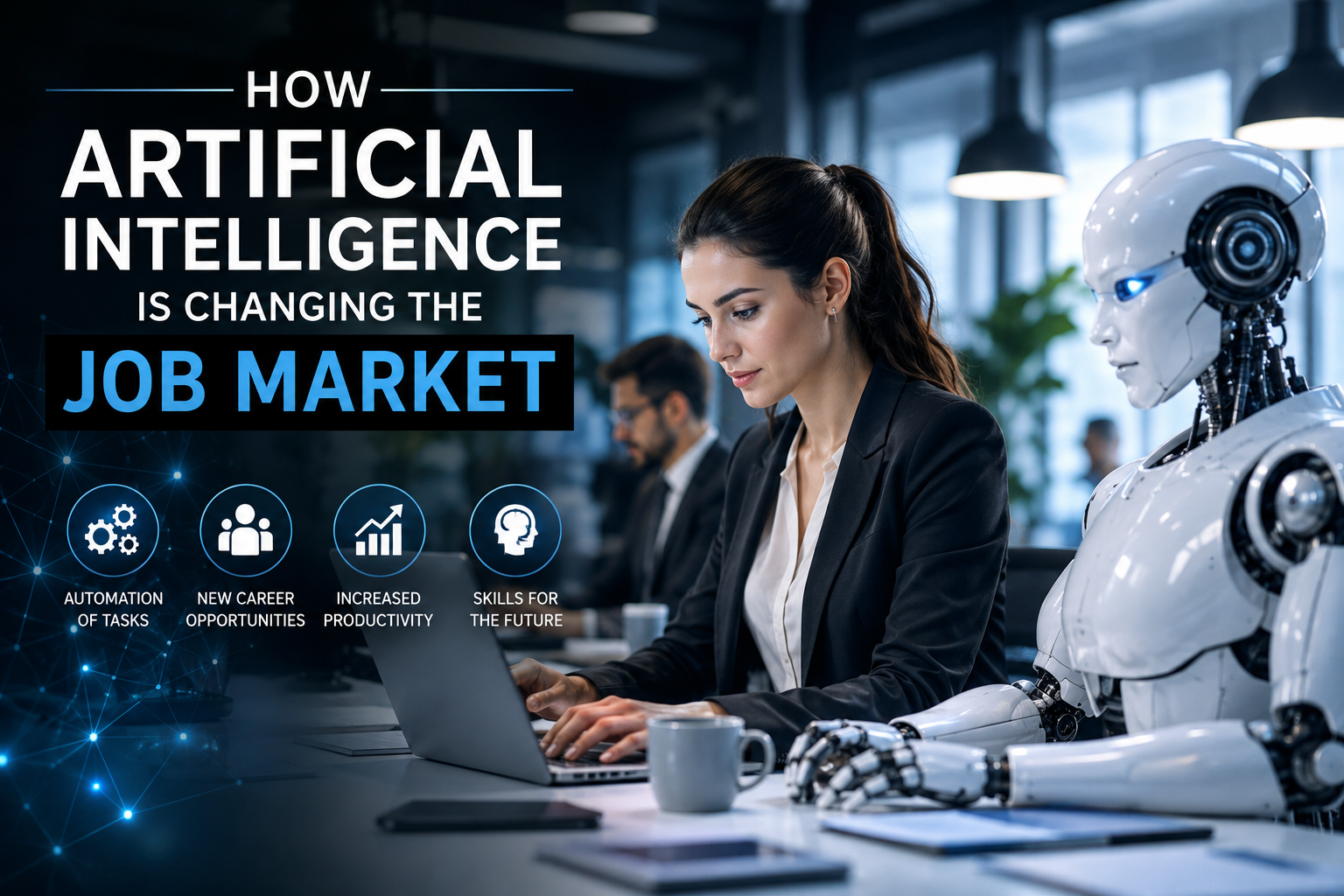
Artificial Intelligence (AI) has rapidly evolved into a mainstream business technology. Organizations use AI to automate repetitive work, analyze data, improve customer experiences, and support decision-making. Instead of simply replacing people, AI is transforming the nature of work and the skills employers value. This article explores how AI is changing recruitment, careers, workplace productivity, and future opportunities while highlighting practical steps professionals can take to remain competitive. According to the World Economic Forum's Future of Jobs Report Future of Jobs Report, AI adoption continues to accelerate across healthcare, finance, manufacturing, education, retail, logistics, and software development. As businesses integrate intelligent systems into daily operations, employees who understand how to collaborate with AI gain a significant advantage.
The Rise of AI
Businesses now use AI for resume screening, customer support, forecasting, software development, cybersecurity, marketing, document processing, and analytics. AI reduces repetitive work and enables employees to focus on creativity, leadership, innovation, and customer relationships.Businesses now use AI for resume screening, customer support, forecasting, software development, cybersecurity, marketing, document processing, and analytics. AI reduces repetitive work and enables employees to focus on creativity, leadership, innovation, and customer relationships.
Jobs and Opportunities
Routine administrative work is becoming increasingly automated, but new careers are emerging in AI engineering, machine learning, prompt engineering, AI governance, AI security, automation consulting, and AI product management. Technology shifts typically replace tasks rather than entire professions. As organizations continue investing in AI, demand for skilled professionals is increasing, making it worthwhile to monitor reputable employment platforms for new openings and evolving career opportunities.
Skills
Future-ready professionals need communication, emotional intelligence, critical thinking, leadership, creativity, adaptability, collaboration, digital literacy, and continuous learning. AI literacy is becoming an important workplace skill across nearly every industry.Future-ready professionals need communication, emotional intelligence, critical thinking, leadership, creativity, adaptability, collaboration, digital literacy, and continuous learning. AI literacy is becoming an important workplace skill across nearly every industry.
Recruitment
Employers increasingly use AI to screen resumes, match candidates with jobs, schedule interviews, and identify relevant skills. Candidates should tailor resumes, quantify achievements, and demonstrate measurable business impact.Employers increasingly use AI to screen resumes, match candidates with jobs, schedule interviews, and identify relevant skills. Candidates should tailor resumes, quantify achievements, and demonstrate measurable business impact.
Ethics
Organizations must ensure AI is transparent, secure, fair, and accountable. Human oversight remains essential when making hiring, legal, healthcare, and financial decisions.Organizations must ensure AI is transparent, secure, fair, and accountable. Human oversight remains essential when making hiring, legal, healthcare, and financial decisions.
Conclusion
Artificial Intelligence is reshaping—not eliminating—the workforce. Professionals who embrace lifelong learning, develop human-centered skills, and learn to use AI effectively will be better positioned for long-term career success.Artificial Intelligence is reshaping—not eliminating—the workforce. Professionals who embrace lifelong learning, develop human-centered skills, and learn to use AI effectively will be better positioned for long-term career success.
FAQ
- Will AI replace every job?
No. AI mainly automates repetitive tasks while creating new opportunities. - What skills are most valuable?
Communication, critical thinking, leadership, creativity, and AI literacy. - How can job seekers prepare?
Keep learning, use AI responsibly, and build a strong portfolio.