A robot every 15 minutes.

A robot every 15 minutes.
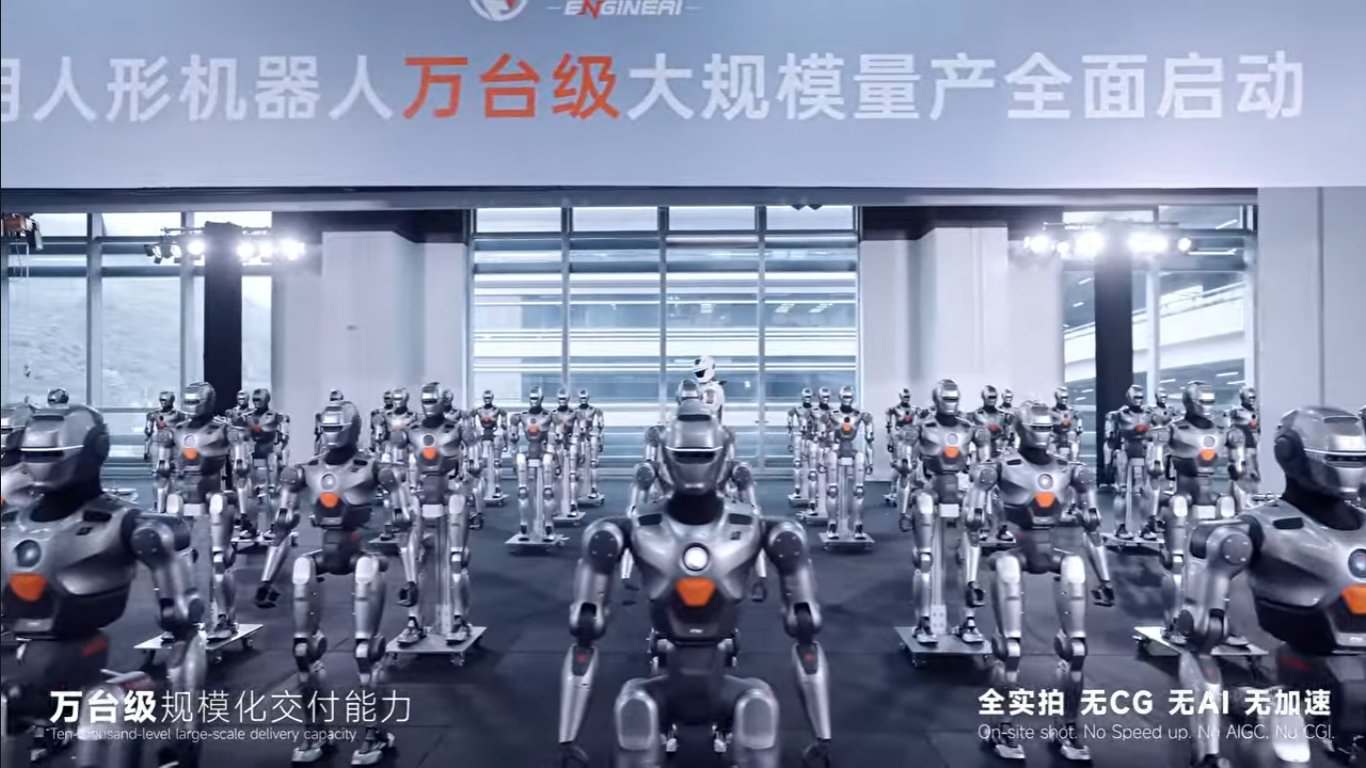


In Shenzhen, a city known as the technological heart of global manufacturing, Startup EngineAI inaugurated a facility that may represent a turning point for the entire humanoid robo industry. The objective is not only to create more intelligent machines, the objective is to produce these machines at an industrial pace. The new factory was designed to attack precisely the biggest bottleneck of modern robotics, scale.


While many companies still manufacture humanoids almost by hand, EngineAI claims to have created a line capable of completing a complete robbery every 15 minutes, if that rate is maintained consistently, we are facing something that is close to what we currently see with automobile manufacturing, and at the center of this strategy are the SE01 and the TH00, yes, you heard right, the name of the robot is TH00. And as a note, in China there is also a population surveillance company that is already using and is called Skynet.


Let's talk about the robots again, being the company's two main humanoid models, unlike many robots that still exhibit rigid and mechanical movements, the model uses a combination of advanced actuators and built-in intelligence systems to produce a more natural and fluid walk. The goal is not only to appear human, but to operate in environments that were originally built for us humans and that is precisely where the question becomes interesting.


The global dispute over humanoid robotics is not only being fought in the field of artificial intelligence, it is also being fought in the capacity for mass manufacturing. While many Western companies prioritize continuous software improvement before expanding production, the Chinese strategy seems to follow another path, first putting the machines on the market, then allowing them to learn in the real world.


The more robots operate in factories, logistics centers and warehouses, the more data is collected and the more data returned to central systems, the faster the algorithms evolve, an extremely powerful cycle then emerges, more robots generate more data, more data generates better intelligence and better intelligence makes the next robberies even more efficient, it is a dynamic that is difficult to interrupt.


EngineAI's first targets are not residences or futuristic applications, they are much more pragmatic sectors, logistics, warehousing and manufacturing, environments where there is currently a lack of workers, where repetitive tasks dominate the routine and where any productivity gain has an enormous financial impact. These humanoids were designed to navigate narrow hallways, move loads, collaborate with human operators and perform physical tasks for long periods. They are not robots to impress at technology fairs, they are machines created to generate economic return.


And perhaps that's the biggest change of all - until last year, humanoids were seen as a distant promise, something reserved for concept videos and futuristic presentations, but when a factory starts churning out an artificial worker every 15 minutes, the conversation changes tone. The question is no longer when robots will hit the market, the question is which sector will be transformed first, because if Shenzhen really succeeds in transforming humanoids into industrial-scale products, we may be witnessing the beginning of one of the biggest economic changes since the arrival of modern automation.


Sorry for my Ingles, it's not my main language. The images were taken from the sources used or were created with artificial intelligence


Sort:  

Congratulations!

Your post has been selected and upvoted by the SteemPro Team 🚀

Explore more on SteemPro:
🌐 https://www.steempro.com
🎮 Play SteemHeights: https://www.steempro.com/games/steem-heights
💬 Join our Discord: https://discord.gg/Bsf98vMg6U

💪 Supporting the growth of the Steem ecosystem together.

🟩 Vote for witness faisalamin:
https://steemitwallet.com/~witnesses
https://www.steempro.com/witnesses#faisalamin

steempro-cover-black.png
This is an automated message.
