What the Artemis II mission discovered

in Popular STEM4 hours ago

What the Artemis II mission discovered
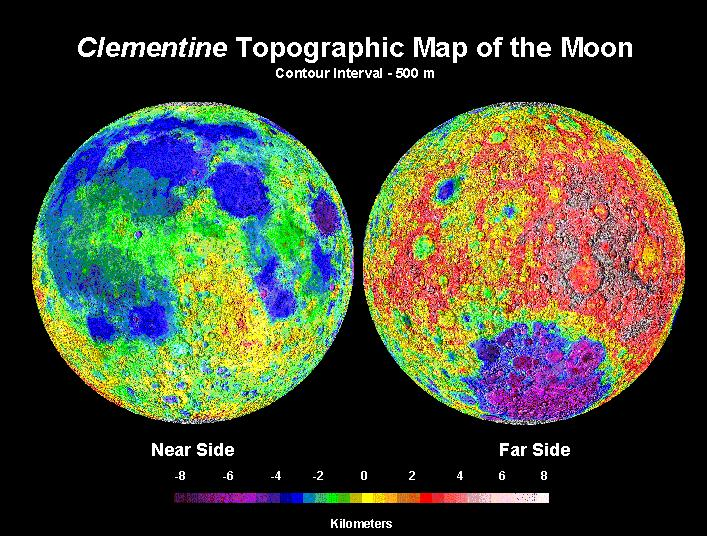


Souce


Initially it was determined that there were more impacts than what was observed, this is dangerous, and that is why a bunker must be built for that base or that lunar camp, and the other issue is that during the passage through the far side of the moon, the crew was exposed to levels of cosmic rays, 15% lower than expected and also only in certain sectors, specifically at the lunar south pole, it is cosmic radiation, I am not referring to solar wind radiation.


Cosmic radiation comes to us from violent events in the universe, distant supernovas and black holes fundamentally and it reaches us from everywhere, what happens is that, for example, here on Earth, the Earth acts as a shield for us which is the ground, only 50% would reach us, that is, it only reaches us from above, on the Moon the same thing happens, if you are on the lunar surface, it only reaches you from what falls from above or from the sides, in any case, but the moon, the ground lunar, the entire body of the moon acts as a shield, however, apparently, there are areas of the moon that act better as a shield and one of those areas with a fairly significant reduction, more than 15%, is that side of the lunar south pole.


These data from Artemis 2 suggest that the key is in the large southern basins, especially the Aitken basin, the Aitken basin in the image would be that entire violet or purple area, the colors indicate the height, it has such intense colors because it is the part that is one of the lowest parts of the entire Moon due to the impact that the Moon suffered in that area and has very special characteristics. It is a very interesting anomaly because it is also a gravitational anomaly. When passing over it, the Artemis 2 astronauts were able to measure how gravity was pulling the ship a little harder in that area.


All this is because there is a greater density of material that contributes to better blocking and dispersing the subatomic particles of cosmic rays. The Aitken basin was formed about 4.3 billion years ago. It has an approximate diameter of 2,500 km, that is the distance between Madrid and Stockholm in Sweden, so it would cover practically all of Europe and has a depth of between 8 to 13 km above the average surface of the Moon. It is believed that the basin was created by the impact of a giant metallic asteroid, basically iron and nickel, but when we talk about metallic there is also gold, what you mentioned before, what you mentioned before, silver, platinum, titanium, everything, but basically iron and nickel would be the two fundamental protagonists, but there are metals in general, the size of what they have calculated is that it would be a mass of metal the size of the island of Hawaii and that it would be buried a few hundred kilometers deep.


In the future it could be drilled, and see its composition, the lunar crust is much thicker and colder than the Earth's, so it could be drilled much more easily, also because there is less gravity and at a greater depth, but the interior of the Moon is also hot, at 100 km we would find ourselves at about 300 ºC. By the way, the thing about lunar tunnels is also interesting because the temperature inside them also increases as they go deeper. It is estimated that in some circumstances, some of these ancient lava tunnels could have a stable temperature inside, which is essential on the moon, of about 10 to 17º C positive, this is essential because the differences between day and night on the moon are hundreds of degrees.


On the moon during the day it reaches 120 ºC and at night it reaches about -170 ºC, that is, the difference between night and day is almost 300 ºC, that is why settling inside one of those tunnels with a stable temperature is necessary, in the 21st century on the Moon we will live in caves again and on Mars too, Mars is also very interesting that same tunnel, that same type of volcanic tunnels to establish bases. What's more, on the Moon they are enormous, enormous, colossal. The Japanese discovered a few years ago one 50 km long that was about 50 to 80 m wide and in certain conditions there can be tunnels in certain conditions and at about 500 m depth or more, tunnels several kilometers in diameter, you can build a city inside, you can build an entire ecosystem inside one of those colossal tunnels, they are so stable that they impact asteroids, they impact meteoroids and they have survived billions of years.


The images without reference were created with AI
Thank you for visiting my blog. If you like posts about #science, #planet, #politics, #rights #crypto, #traveling and discovering secrets and beauties of the #universe, feel free to Follow me as these are the topics I write about the most. Have a wonderful day and stay on this great platform :) :)


! The truth will set us free and science is the one that is closest to the truth!