19-04 2026 - Exercise - Function Limit [EN]-[IT]
Cover background image generated with AI, software used: copilot microsoft
~~~ La versione in italiano inizia subito dopo la versione in inglese ~~~
[ENGLISH]
19-04 2026 - Exercise - Function Limit [EN]-[IT]
With this post, I would like to provide some brief insights into the topic mentioned above by solving some exercises.
The context in which we operate is that of Mathematical Analysis
(lesson/article code: LS_11)
Function Limit
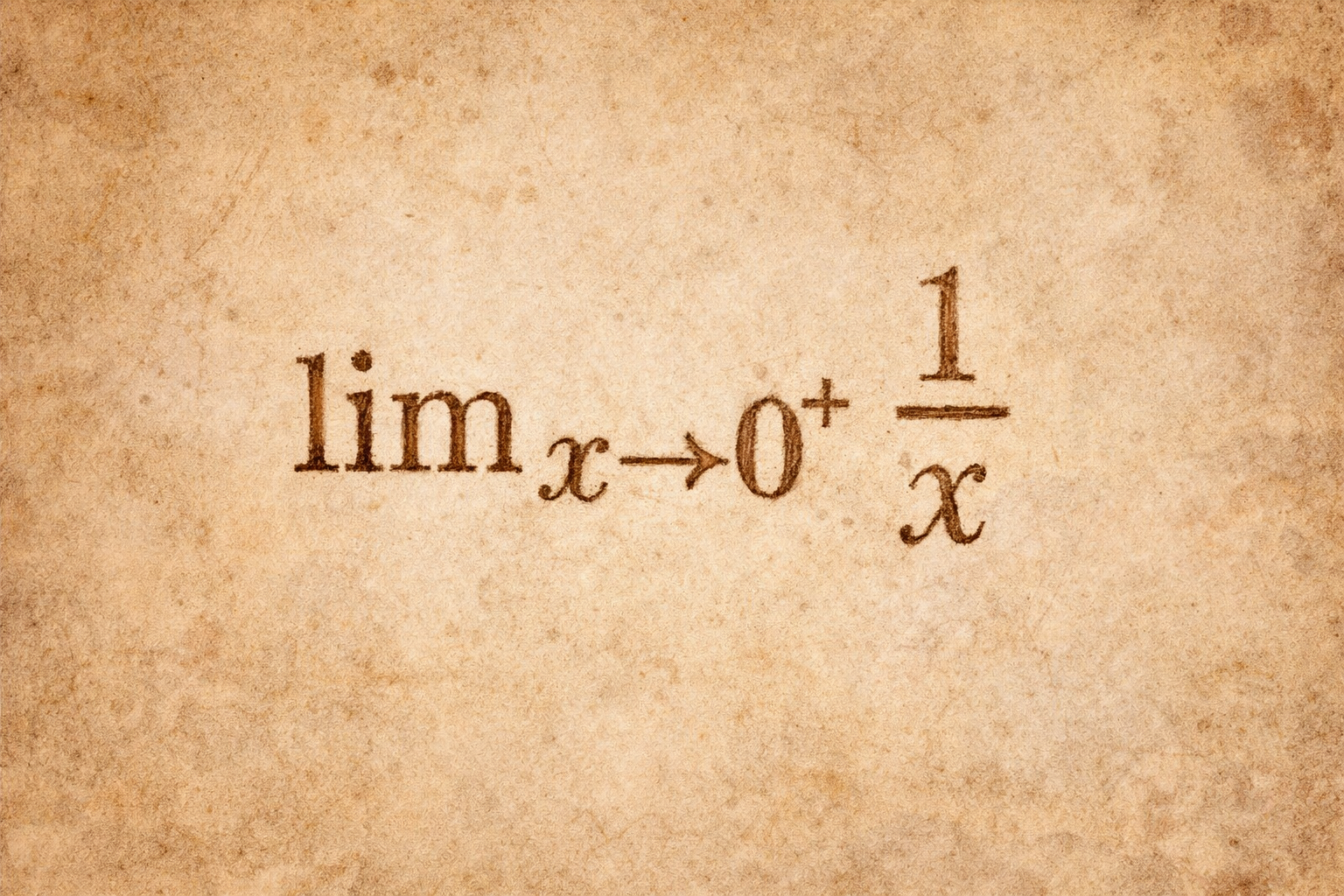
The concept of limit originates from ancient geometric problems, was developed in the 17th century with infinitesimal calculus, and was formalized in the 19th century with the rigorous definition ε–δ.
Simply put, we can say that the limit of a function is the value the function approaches as the variable x approaches a certain point.
Below I propose how a function limit is formally described:
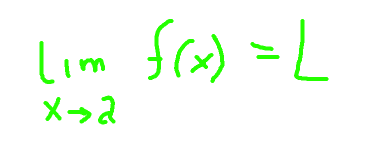
This form is read as follows:
As x approaches a, the values of f(x) approach L.
The fundamental point of the limit is that the function limit provides a result without the need for x to be equal to a; what matters is what happens near the point.
Mathematically, we can say that the limit of a function is the value to which the function approaches when the independent variable approaches a certain point.
Example
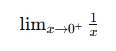
Let's study this limit:
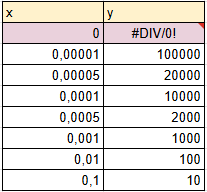
Let's try to table some data for some values of x:
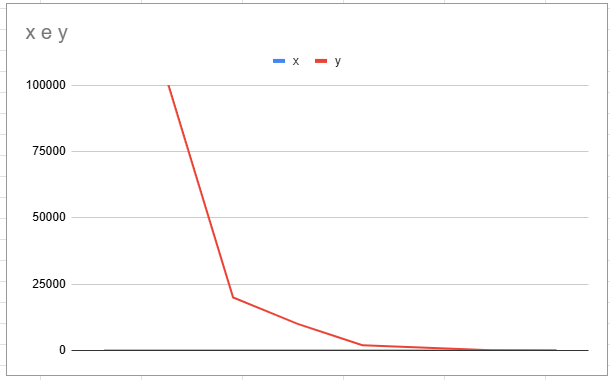
If we plot a graph, we will obtain the following: follows:
Result
The result of our limit will be the following:
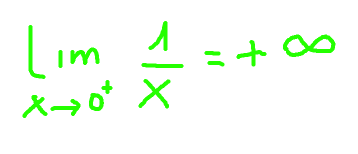
The limit as x approaches 0 from the right of 1/x is plus infinity. The function experiences the fact that the closer x gets to 0, the larger its value.
Therefore, the function does not approach a finite number, but grows without bound.
WARNING: This does not mean that the limit is infinite, but rather that the function becomes arbitrarily large.
Conclusions
Today, limit functions represent a fundamental tool for describing continuous phenomena in mathematics, physics, and engineering.
Limit functions are used:
- in the automotive industry, especially to study acceleration and traction control.
- in mechanical engineering, to study material deformations.
Question
Did you study limit functions in school? If so, do you remember how to solve them?
[ITALIAN]
19-04-2026 - Esercizio - Limite di funzione [EN]-[IT]
Con questo post vorrei fornire alcune brevi nozioni a riguardo dell’argomento citato in oggetto svolgendo degli esercizi.
Il contesto in cui operiamo è quello della Analisi matematica
(codice lezione/articolo: LS_11)
Limite di funzione
Il concetto di limite nasce da problemi geometrici antichi, viene sviluppato nel Seicento con il calcolo infinitesimale e viene formalizzato nel XIX secolo con la definizione rigorosa ε–δ.
In parole semplici possiamo dire che il limite di una funzione è il valore a cui la funzione si avvicina quando la variabile x si avvicina a un certo punto.
Qui di seguito propongo come formalmente viene descritto un limite di funzione:
Questa forma si legge nella seguente maniera:
Quando x si avvicina ad a, i valori di f(x) si avvicinano a L.
Il punto fondamentale del limite è che il limite di funzione fornisce un risultato senza che sia necessario che x sia uguale ad a, quello che conta è quello che succede vicino al punto.
Possiamo dire che matematicamente il limite di una funzione è il valore a cui la funzione tende quando la variabile indipendente si avvicina a un determinato punto.
Esempio
Studiamo questo limite:
Proviamo a mettere in tabella un po' di dati per alcuni valori di x:
Se tracciamo un grafico otterremo quanto segue:
Risultato
Il risultato del nostro limite sarà il seguente:
Il limite per x che tende a 0 da destra di 1/x è più infinito. Alla funzione succede che più x si avvicina a 0 e più il valore cresce.
Quindi la funzione non si avvicina a un numero finito, ma cresce senza limite.
ATTENZIONE: Questo non significa che il limite vale infinito come numero, ma che la funzione diventa arbitrariamente grande.
Conclusioni
Oggi il limite di funzione rappresenta uno strumento fondamentale per descrivere fenomeni continui in matematica, fisica e ingegneria.
I limiti di funzione vengono usati:
-nell'automotive soprattutto per studiare accelerazione e controllo di trazione.
-In ingegneria meccanica per studiare le deformazioni dei materiali
Domanda
Avete fatto a scuola i limiti di funzione? Se SI, vi ricordate come si fa a risolverli?
THE END
Thank you for sharing on steem! I'm witness fuli, and I've given you a free upvote. If you'd like to support me, please consider voting at https://steemitwallet.com/~witnesses 🌟
This post has been upvoted by @italygame witness curation trail
If you like our work and want to support us, please consider to approve our witness
Come and visit Italy Community